In May 2016, while I was carrying out ethnographic research in the Kakuma Refugee Camp in Kenya, a Form 4 (12th grade) history teacher asked me if I would teach his students about U.S. democracy. We flipped through the history and government textbook to one of the last chapters where the national curriculum outlined political systems in Kenya, England, India, and the United States. It was a peculiar moment to put the U.S. democratic system on display.
Right away I recognized her. Ruby Bridges. The courageous girl who defied white racists and became the first to integrate an all-white elementary school. My 7-year-old son pulled a handout out of his backpack with her face on it. He is in a bilingual, two-way immersion program at our local elementary school. As is our custom on Friday, we emptied his backpack and sorted the contents. We determined what needed to be recycled, what would be hung on our whiteboard, and what needed to be stored in my Things-to-take-care-of box by the fridge. I smiled, because as a former history teacher and lover of Black history, I was happy to see my son learning about this important historical moment. And then, I took a closer look and saw that it was in Spanish. I was elated as it dawned on me that my son truly is emergent bilingual. “Caleb, what’s this about? Did you read this in school?”
NCTQ, which claims to “provide an alternative national voice to existing teacher organizations and to build the case for a comprehensive reform agenda that would challenge the current structure and regulation of the profession,” was created by the Thomas B. Fordham Foundation in 2000 and incorporated in 2001 as a policy response to a perception that colleges of education were not adequately preparing teachers. According to education historian and NCTQ critic Diane Ravitch, the conservative members of the Thomas B. Fordham foundation perceived teacher training as problematic due to an overemphasis on social justice and a lack of focus on basic academic skills and abilities. Thus, NCTQ was originally founded as an entity through which to encourage alternative certification and circumvent colleges of education. Indeed, early on, NCTQ was closely connected to ABCTE (American Board for the Certification of Teacher Excellence), which created a series of tests that potential teachers could pass in order to bypass teacher education programs altogether by paying $1,995.00.
On a chilly day in the late fall of 2015, in the pews of the Old First Reformed United Church of Christ in the Old City Neighborhood of Philadelphia near the Delaware River, we sat, excited with anticipation, among nearly 200 participants at the second annual Philadelphia Caucus of Working Educators (WE) daylong convention. The nine members of our slate who would challenge existing union leadership in the upcoming election had just been announced and Ismael Jimenez, the nominee for vice president of high schools, took the mic:
We need to start shifting this paradigm. This paradigm that has us disengaged. Powerless. Beholden to interests that aren’t ours. They are treating us like objects. Things just happen to us. No longer can we sit in complacency. The victory that I’m talking about isn’t just a PFT [Philadelphia Federation of Teachers] election. This is a means to an end. And the end is justice.
How 4th-grade students in Southern California were helped by their teachers to develop curriculum surrounding the mass deportation of U.S. citizens of Mexican heritage in the 1930s and pass a law to investigate what happened.
A first-year teacher struggles with what it means to be a social justice educator.
Trump supporter Carl Paladino’s racism, misogyny, and transphobia galvanized community members to oust him from the Buffalo School Board. Their struggle also laid the groundwork for new coalitions and progressive change.
A special education teacher uses poetry to help her middle school students write their own narratives and celebrate themselves.
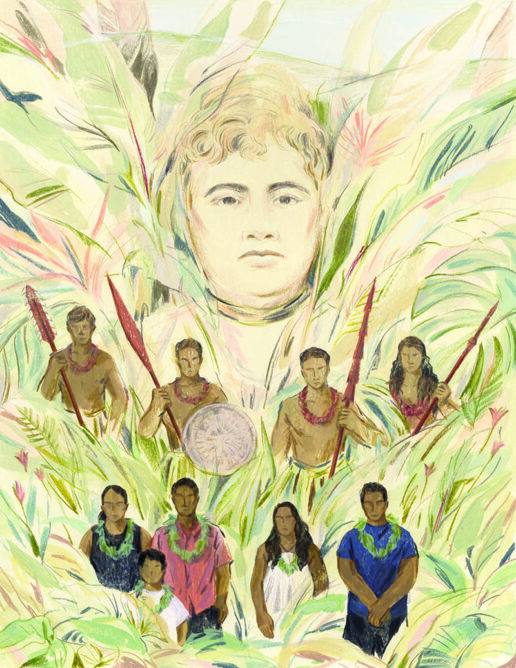
A high school teacher uses the #MeToo movement and students’ own experiences with apologies to interrogate the government’s 1993 apology to Native Hawaiians for the 1893 overthrow of the Kingdom of Hawai’i.
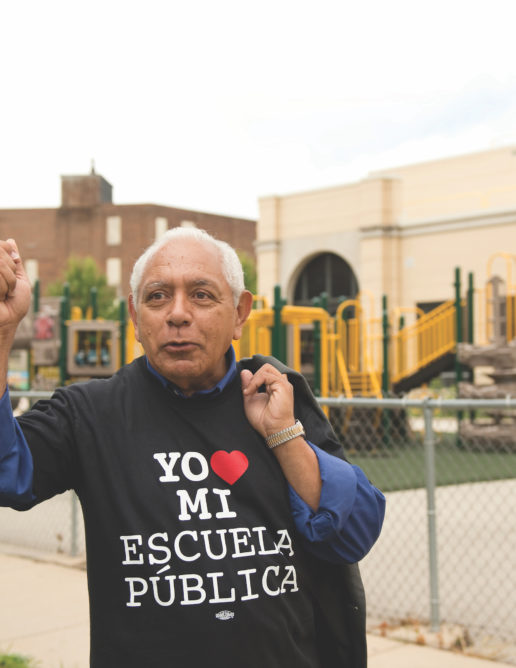
Organizer and advocate Tony Báez has been fighting for improved bilingual education programs for decades. In this interview, he talks about the current state of bilingual education and describes how parents and educators won a maintenance K-12 bilingual program in the Milwaukee Public Schools.
An elementary school teacher uses his students’ T-shirts to launch a lesson about child labor, basic economics, factories, unions, and strikes. “When I was a child, I remember ‘playing pretend’ with my cousins. We could be anyone we imagined, and in that moment, we were those people. Why not use that energy and imagination as a resource? When we use our imagination to walk in another’s shoes, that’s where real learning begins.”
A teacher wrestles with her frustrations with having to administer a standardized test that she wouldn’t even allow her own daughter to take. “Fourteen days I enforced SBAC testing to be the priority of our classroom learning — or rather, our classroom “unlearning.” Fourteen days SBAC took away.”
A high school teacher critiques the textbook treatment of the Cold War and U.S. imperialism. She describes her approach to the “curricular conundrum” that the Cold War presents because it lasted so long, and was so far-flung. “”If we are ever to create a different world, one in which the United States does not cast an outsized and militarized shadow across the globe, we need our students to understand how and why that shadow was created in the first place.”
An education researcher explores “no-excuses” discipline policies and the rate of out-of-school suspensions at charter schools in Denver and around the nation. “Democracy is healthiest when our educational institutions reflect our best virtues — creativity, joy, and growth. We must strengthen our oversight over no-excuses charter schools, thereby ensuring that no child in that city — or our country — is subjected to policies that could have been culled from one of Denver’s neighboring prisons.”
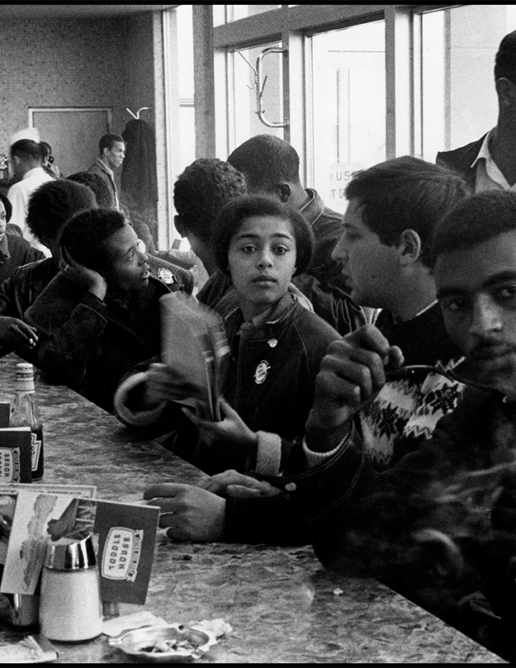
Teaching the history of the Student Nonviolent Coordinating Committee helps students see the Civil Rights Movement as being fueled by thousands of young people like themselves instead of a few charismatic leaders. “Without the history of SNCC at their disposal, students think of the Civil Rights Movement as one that was dominated by charismatic leaders and not one that involved thousands of young people like themselves. Learning the history of how young students risked their lives to build a multigenerational movement against racism and for political and economic power allows students to draw new conclusions about the lessons of the Civil Rights Movement and how to apply them to today.”
A middle school English teacher calls for an end to separating students into groups of “gifted” and “not gifted” and argues that labeling students damages them — and us. “We are going down too many roads that push too many of our children aside, reinforcing the worst of our society’s racist and classist limitations. Let us push back hard.”
Using the experience of high school exit testing in New Jersey as an example, Stan Karp analyzes the gross negative impact of these high-stakes tests on students and schools.
A middle school teacher describes the trauma experienced by his students over the year and struggles to create meaningful hope rather than slogans.
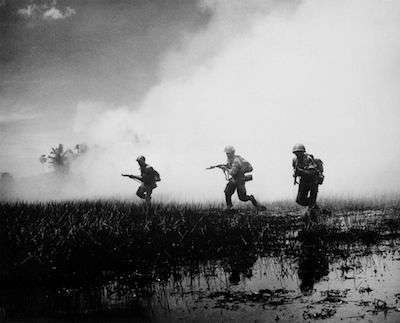
A teacher uses poetry and the creation of found poems as a way to get her students to think beyond the simple “two sides to every story” narrative of the Vietnam War.
A neighborhood mapping exercise helps students develop their narrative writing and storytelling skills while also building classroom community by connecting home worlds to the curriculum. Adapted from the newly-released second edition of Reading, Writing, and Rising Up.
Using Marshallese poet and climate justice activist Kathy Jetñil-Kijiner’s poem “Dear Matafele Peinam,” a teacher helps 7th graders think about the sacred spaces in their own lives and how they will be affected by climate change.
A journalist explores the way Indigenous language and community is connected to the classroom in several communities in Alaska, and explores how educators there have built new frameworks to fight against Eurocentric curriculum.
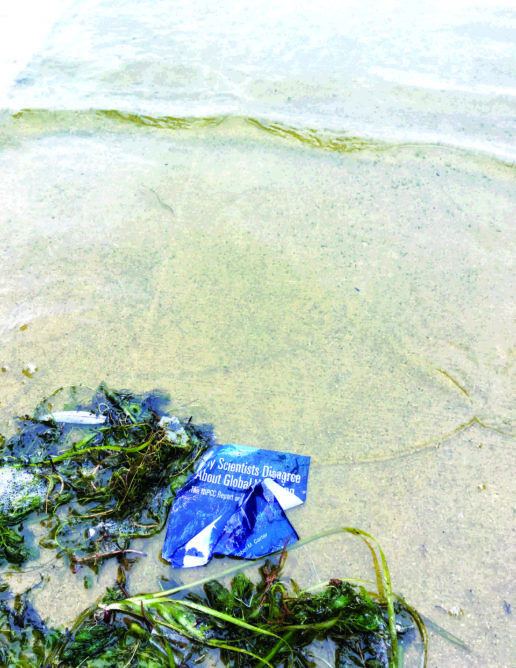
A teacher shows his 3rd- and 4th-grade students the Heartland Institute’s climate change denial book that was sent to every science teacher in the nation.
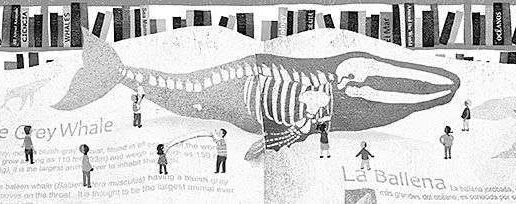
Una maestra bibliotecaria describe los dinámicos programas de su biblioteca y expone el daño causado cuando se considera a los bibliotecarios como dispensables y a las bibliotecas como el centro de los exámenes.
A public school teacher-librarian describes a vibrant library program—and exposes the harm when librarians are seen as dispensable and libraries become testing centers.