
The Power of Plants
A middle school teacher in Laos attempts to restore her and her students’ connections to the land through gardening together and learning about Indigenous medicine.

A middle school teacher in Laos attempts to restore her and her students’ connections to the land through gardening together and learning about Indigenous medicine.
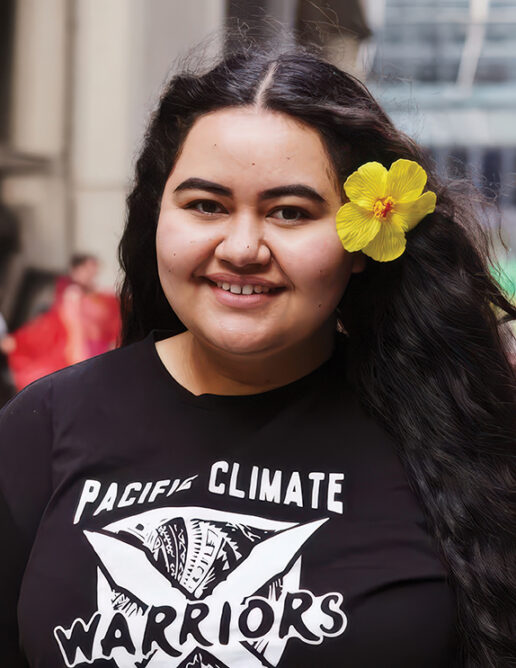
Yonamine describes how learning about young people fighting against climate change energized her summer school students.

Christensen uses abecedarian poetry to excavate student memories and bring their lives into the classroom.
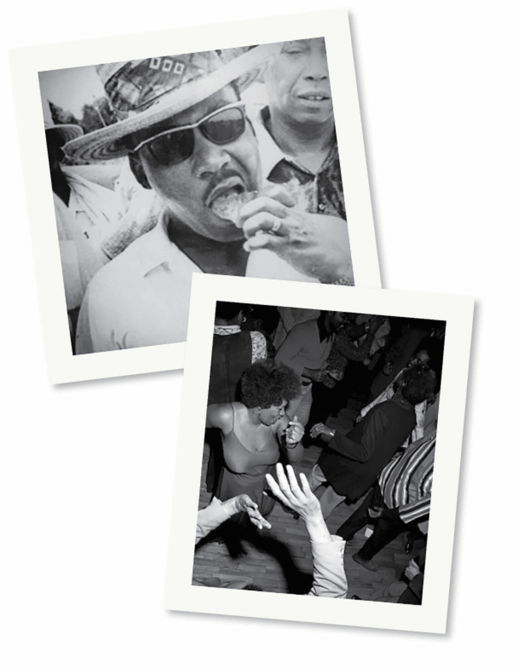
Kaler-Jones and Lee discuss how they used photographs of joy to humanize leaders of the Civil Rights Movement.
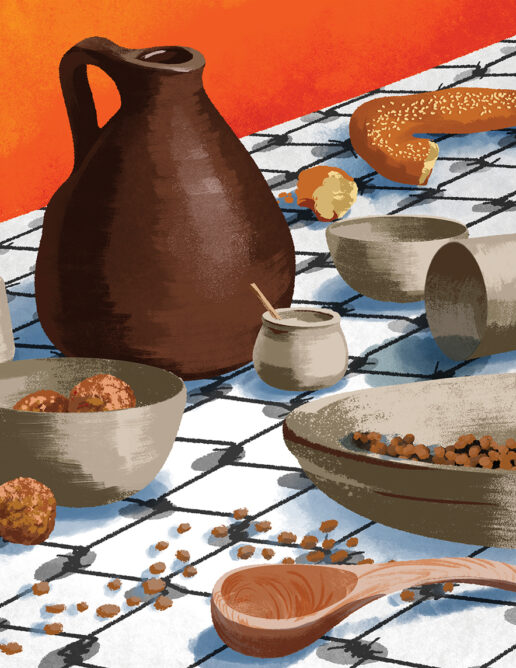
Winograd and Chertoff expose the Echoes & Reflections curriculum — produced by the Anti-Defamation League, Yad Vashem, and the Shoah Foundation — for its pro-Israel indoctrination and offer an alternative vision for how to teach about the Holocaust.
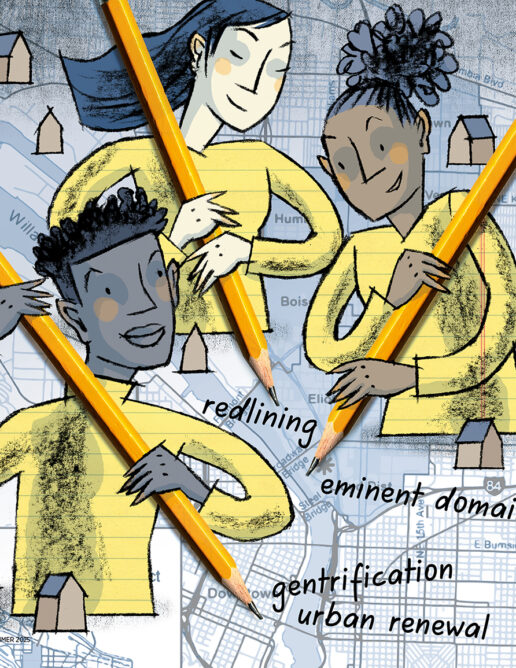
Christensen details strategies to encourage students to write essays that matter while they investigate decades of housing discrimination in their neighborhood.
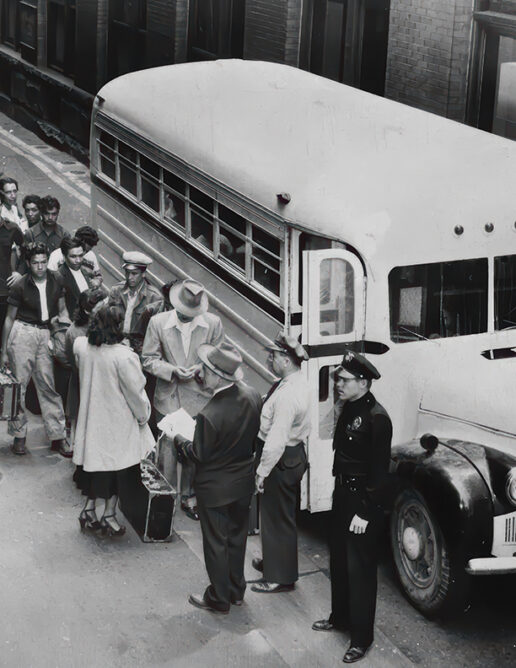
A 5th-grade teacher engages students in a unit on the forced deportation of 2 million Mexicans and Mexican Americans from the United States during the Great Depression.
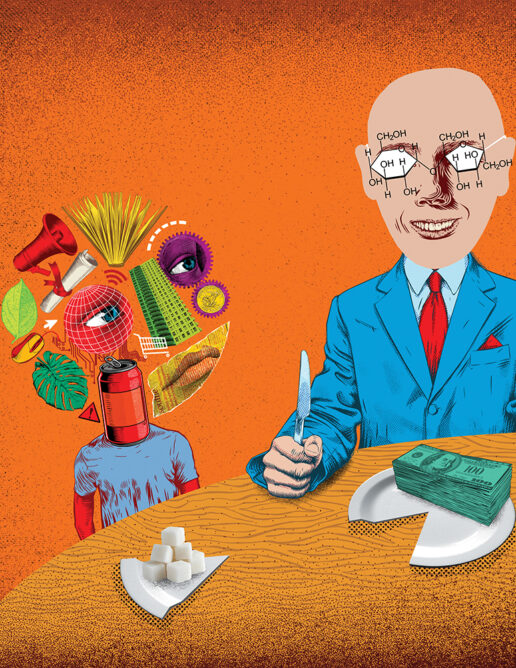
Through a trial role play in a high school science class, students explore who — or what — is to blame for the rise of epidemics related to increased sugar consumption.
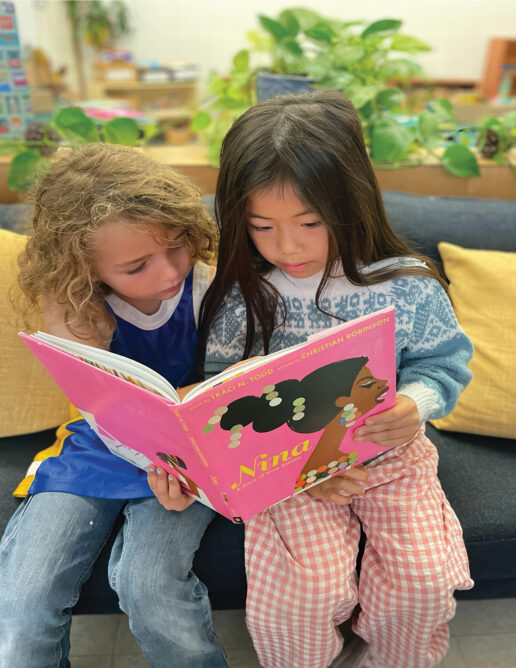
During a unit on changemakers, 1st and 2nd graders learn about power, change, representation, and community through the songs of Nina Simone.
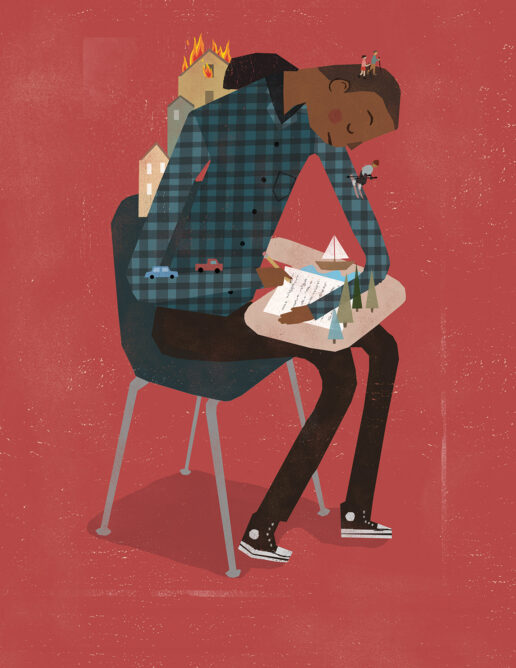
Christensen teaches the writing process by encouraging students to celebrate beloved places with the haibun, a Japanese poetic form.
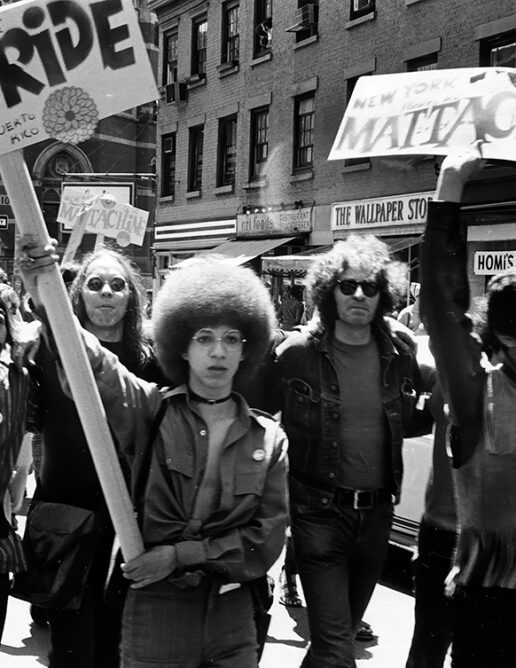
Students imagine themselves as LGBTQ+ activists and debate key questions facing organizers through more than 50 years of movement history.
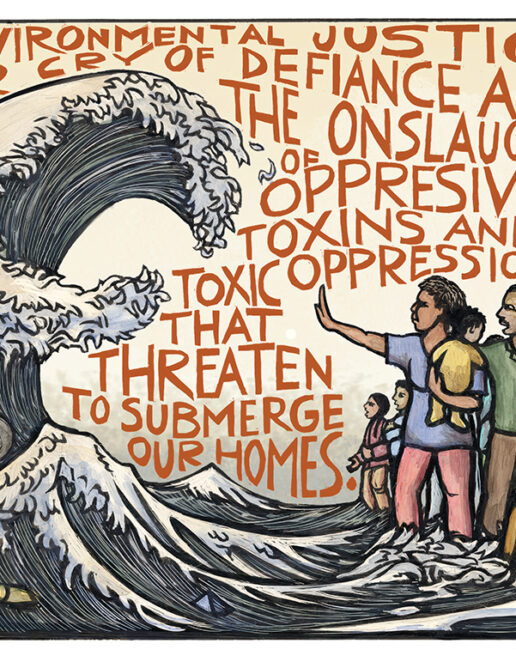
A high school social studies teacher discusses ways to teach the rich history of multiracial, community-based environmental organizing in the United States.
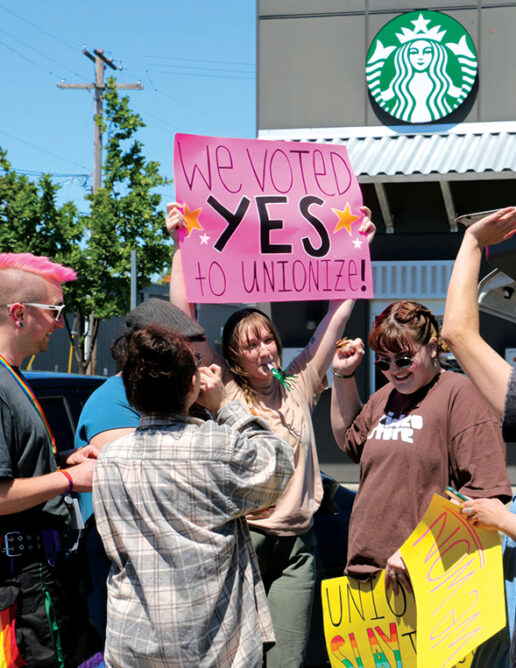
The director of the Young Workers Education Project describes a high school simulation based on recent Starbucks workers’ organizing.

A high school teacher and co-editor of Teaching Palestine details a classroom simulation revealing some of the inequities Palestinians face throughout Israel and the Occupied Territories.
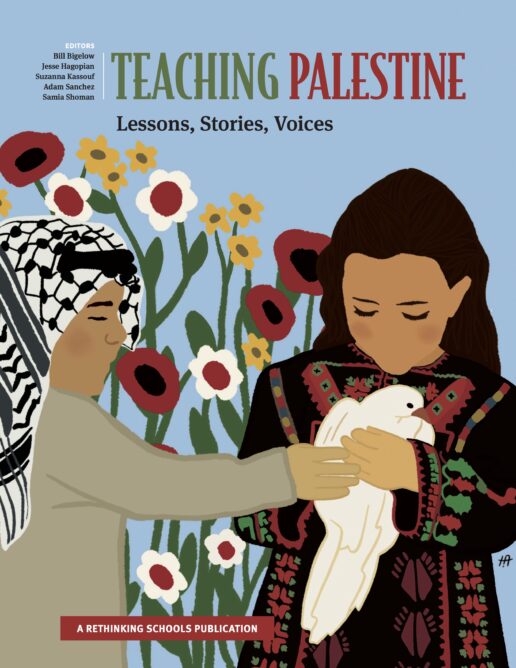
Palestine has long been one of the great silences in the official curriculum. Teaching Palestine: Lessons, Stories, Voices provides educators with powerful tools to uncover the history and current context […]

A middle school English teacher uses online mapping tools to connect past racist housing policy to the present.

First graders learn about accessibility and empathy through constructing emergency signals.

A high school science teacher revises her lesson on the USPHS Untreated Syphilis Study at Tuskegee to center resistance.

Layering maps, a former high school science teacher illustrates spatial injustice in air quality and highway construction.

A high school social studies teacher describes a classroom simulation where students experience the effects of decades of racist federal housing policies.

Transgender Justice in Schools provides inspirational stories from trans students and educators and resources for teachers, students, and parents seeking to build communities where everyone flourishes. This book will educate, […]

An environmental justice teacher encourages students to critically examine proposed solutions to climate change.

Bigelow details a new mixer lesson about the roots of Zionism in the classroom — and its relevance for today’s crisis.

A high school language arts teacher writes about the power of students interviewing family and friends to develop migration narratives.

Christensen describes teaching high school students about new anti-LGBTQ+ laws — and the growing resistance to them.