An education researcher explores “no-excuses” discipline policies and the rate of out-of-school suspensions at charter schools in Denver and around the nation. “Democracy is healthiest when our educational institutions reflect our best virtues — creativity, joy, and growth. We must strengthen our oversight over no-excuses charter schools, thereby ensuring that no child in that city — or our country — is subjected to policies that could have been culled from one of Denver’s neighboring prisons.”
I was just about to finish my second year teaching 2nd grade. It was the first week of June and school was quickly coming to a close. The sun was out and everyone’s energy was extraordinarily high. We were in Seattle after all; when the sun comes around, you rejoice. One morning that week I came to work and noticed I had an email from a parent. This was a parent I had a good relationship with, and she often checked in to see how her daughter was doing. But this email was different. The mother explained that her daughter had been cornered at recess the previous day by some boys who were also 2nd graders. The boys grabbed, groped, and humped her. They told her they were going to have sex with her. Her daughter told them to stop and to leave her alone, but they persisted. As this sweet one told her story of shame, confusion, and hurt to her family later that day, she became so upset that she threw up in the car. Her mother knew this wasn’t a miscommunication or misunderstanding.
During a recent conversation, a former high school classmate said, “I always wondered why you left Eureka. I heard that something shameful happened, but I never knew what it was.”
Yes, something shameful happened. My former husband beat me in front of the Catholic Church in downtown Eureka. He tore hunks of hair from my scalp, broke my nose, and battered my body. It wasn’t the first time during the nine months of our marriage. When he fell into a drunken sleep, I found the keys he used to keep me locked inside and I fled, wearing a bikini and a bloodied white fisherman’s sweater. For those nine months I had lived in fear of his hands, of drives into the country where he might kill me and bury my body. I lived in fear that if I fled, he might harm my mother or my sister.
I carried that fear and shame around for years. Because even though I left the marriage and the abuse, people said things like “I’d never let some man beat me.” There was no way to tell them the whole story: How growing up and “getting a man” was the goal, how making a marriage work was my responsibility, how failure was a stigma I couldn’t bear.
Using the experience of high school exit testing in New Jersey as an example, Stan Karp analyzes the gross negative impact of these high-stakes tests on students and schools.
“Ugh, Dress Codes!” The title of one of 15-year-old Izzy Labbe’s SPARK Movement blog posts encapsulates what I’ve heard so many girls say they feel about their middle and high […]
A teacher shows his 3rd- and 4th-grade students the Heartland Institute’s climate change denial book that was sent to every science teacher in the nation.
The edTPA has become a credentialing requirement in many states. Its implementation has distorted relationships throughout teacher education.
Sara Holbrook’s poems appear on the Texas STARR tests. Her efforts to answer the questions about her own poetry expose the narrowness of standardized testing.
On Sept. 20, 2015, thousands of Seattle Education Association (SEA) members voted to approve a new contract with the Seattle Public Schools. The vote officially ended the strike, which delayed […]
Anti-Privatization Movement Goes International By Bob Peterson Teacher union leaders from around the world pledged to build an international movement against school privatization and commercialization at the 7th World Congress […]
Is the Common Core better than current approaches to English language learners—or the next salvo in more than a decade of attacks on bilingual programs?
Two elementary school teachers in Albuquerque resist the proliferation of harmful standardized tests. They see it as a professional responsibility.
An administrator describes the journey of her K-8 school as it welcomes a transgender 8th grader and the gender transition of another student.
We’re at a tipping point. The killings of Trayvon Martin, Jordan Davis, Mike Brown, Tamir Rice, Renisha McBride—and far too many other African Americans—have put to rest the myth of […]
Long Island Teacher Boycotts Common Core Tests Beth Dimino is an 8th-grade science teacher and president of the Port Jefferson Station Teachers Association in New York. She announced in February […]
Public schools face increasing scrutiny while private voucher schools are allowed to operate with almost no oversight. Why the double standard?
This spring, the School District of Philadelphia voted to close down 24 schools, about one in 10 public schools, affecting nearly 10,000 students across the district. The vote followed months […]
The edTPA will lead to better teachers and more professional respect.
The edTPA distorts the teacher education process and opens the door to Pearson Inc. reaping more profits and power.
The dangers to the teaching profession are real, but is edTPA the solution?
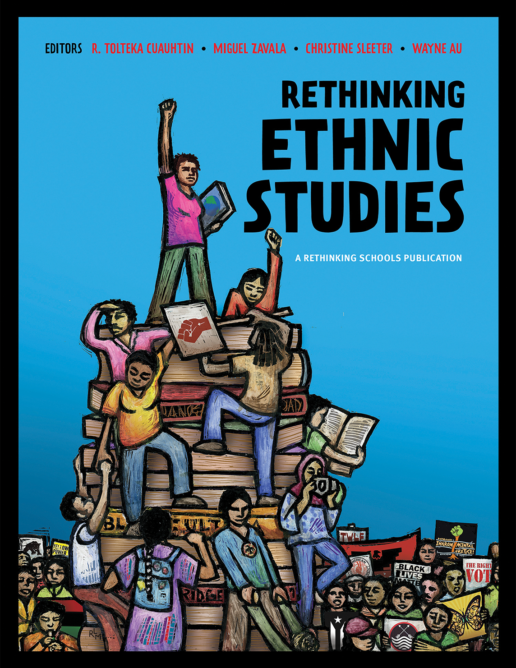
As part of a growing nationwide movement to bring Ethnic Studies into K-12 classrooms, Rethinking Ethnic Studies brings together many of the leading teachers, activists, and scholars in this movement […]
Rethinking Popular Culture and Media begins from the premise that the “popular” is political. Whether it’s Disney and Barbie, or Snapchat and Vine, youth navigate, shape, and repurpose popular culture. […]
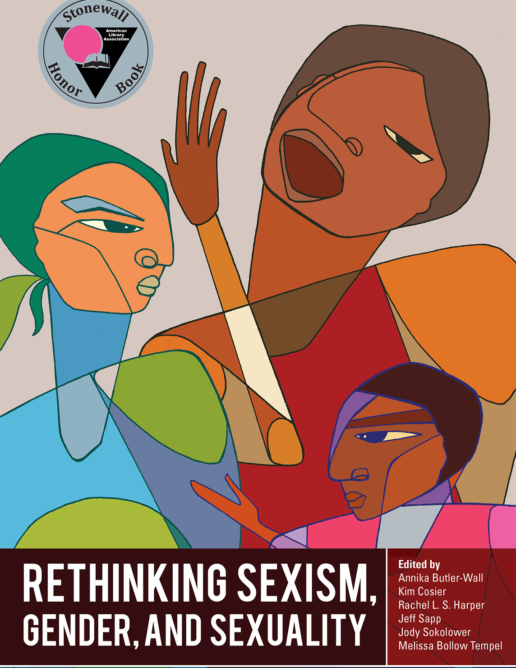
Rethinking Sexism, Gender, and Sexuality is a collection of inspiring stories about how to integrate feminist and LGBTQ content into curriculum, make it part of a vision for social justice, […]
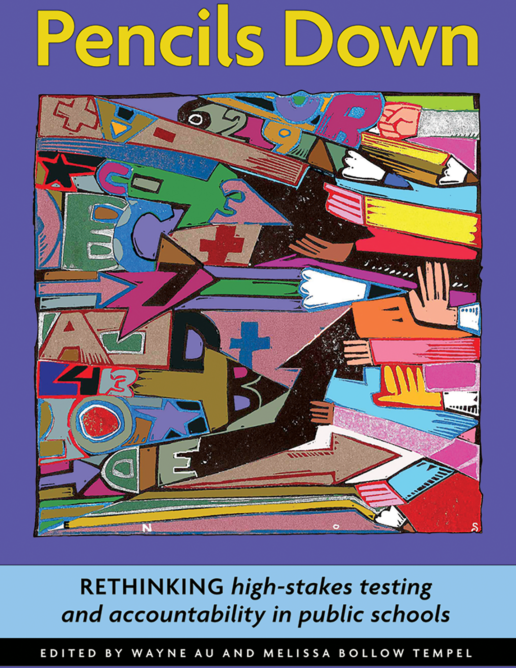
This powerful collection from the groundbreaking Rethinking Schools magazine takes high-stakes standardized tests to task. Despite overwhelming evidence that the tests are invalid ways to measure teaching and learning — […]
Rethinking School Reform puts classrooms and teaching at the center of the debate over how to improve public schools. Drawing on some of the best writing from the quarterly journal […]