How 4th-grade students in Southern California were helped by their teachers to develop curriculum surrounding the mass deportation of U.S. citizens of Mexican heritage in the 1930s and pass a law to investigate what happened.
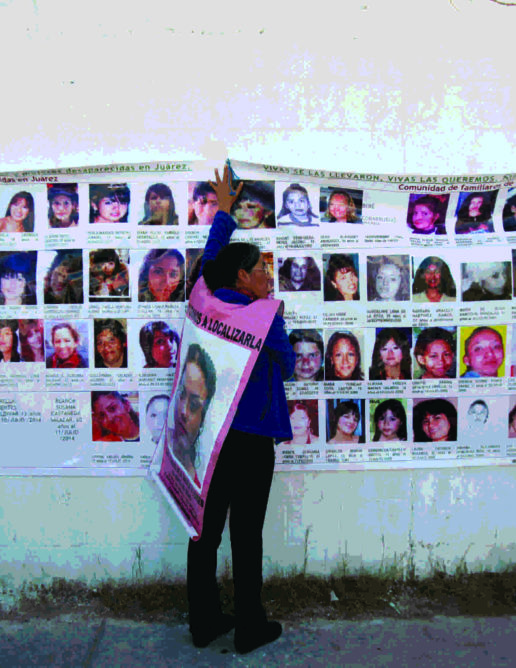
Since 1993, the Mexican border city of Ciudad Juárez has been shaken by disappearances of teenage girls and young women. Officials say they have few leads. The murders in Juárez have received some international attention, primarily due to government inaction. Yet little has been done by the government to prevent violence against women and girls, as officials neglect to bring their perpetrators to justice.
Residents do not let these deaths go unnoticed as hundreds of pink crosses — a symbol of these missing women — dot the border. An increase in these deaths coincided with the implementation of the North American Free Trade Agreement (NAFTA). A treaty between Mexico, the United States, and Canada, NAFTA sought to increase investment opportunities by eliminating tariffs and, like many other economic agreements, benefited the economic elites of the three countries while resulting in widespread unemployment, increased class stratification, and mass emigration. Most of the “disappeared” women work in assembly plants or maquiladoras, owned by the United States and transnational corporations that dashed to northern Mexico post-NAFTA to reap the benefits of lower wages and lax environmental regulation.
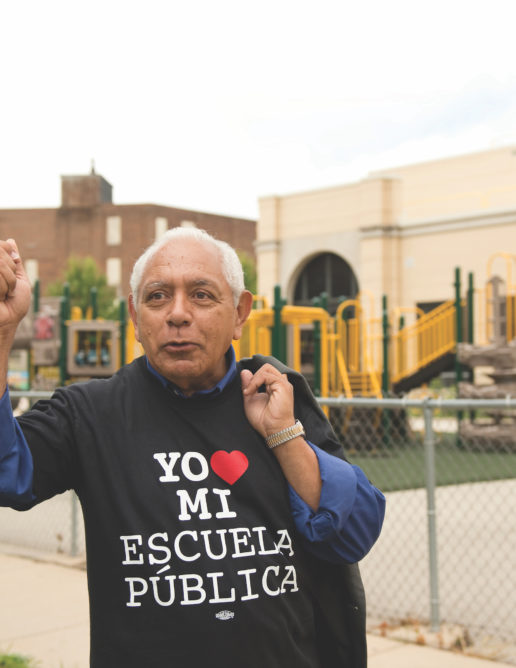
Organizer and advocate Tony Báez has been fighting for improved bilingual education programs for decades. In this interview, he talks about the current state of bilingual education and describes how parents and educators won a maintenance K-12 bilingual program in the Milwaukee Public Schools.
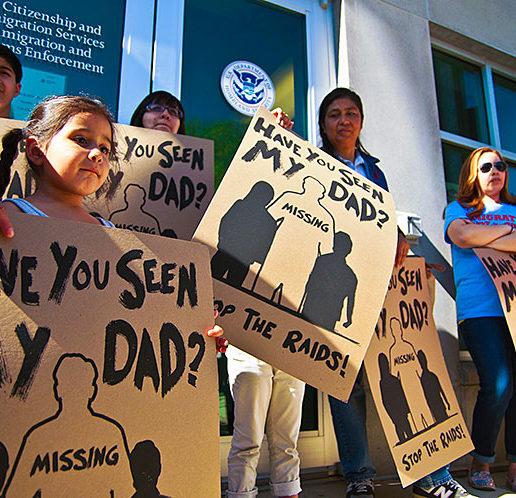
It has always been an educator’s responsibility to act in solidarity with vulnerable students. But with President Donald Trump’s September declaration that he will end DACA, we are called on to be more audacious, more resolute, and more imaginative in our solidarity with the 800,000 undocumented young people who now face a frightening uncertainty about their future in the United States.
A teacher wrestles with explaining refugee crises, dictators, and the trauma of war to her 1st- and 2nd- grade classroom.
A middle school teacher describes the trauma experienced by his students over the year and struggles to create meaningful hope rather than slogans.
Educator Debbie Wei, co-founder of a folk arts-based school in Philadelphia’s Chinatown, describes her journey—from growing up as the child of Chinese immigrants who never spoke to her in their native language, to advocating for heritage language programs.
Una maestra de primaria se da cuenta que debe dejar a un lado el guión y la antología de su currículo para encontrar literatura latina en español y abrir un espacio a las vidas de sus estudiantes.
An early elementary school teacher realizes she needs to dump the scripted curriculum and basal reader, find Latina/o literature in Spanish, and make space for her students’ thoughts and feelings.
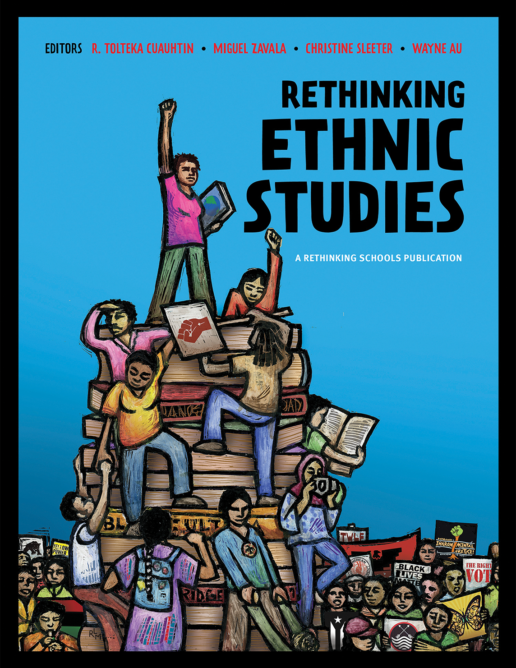
As part of a growing nationwide movement to bring Ethnic Studies into K-12 classrooms, Rethinking Ethnic Studies brings together many of the leading teachers, activists, and scholars in this movement […]
The Line Between Us explores the history of U.S-Mexican relations and the roots of Mexican immigration, all in the context of the global economy. And it shows how teachers can […]