The Greatest Little League Season of All Time: How One Team Confronted Racism — and Became Champions
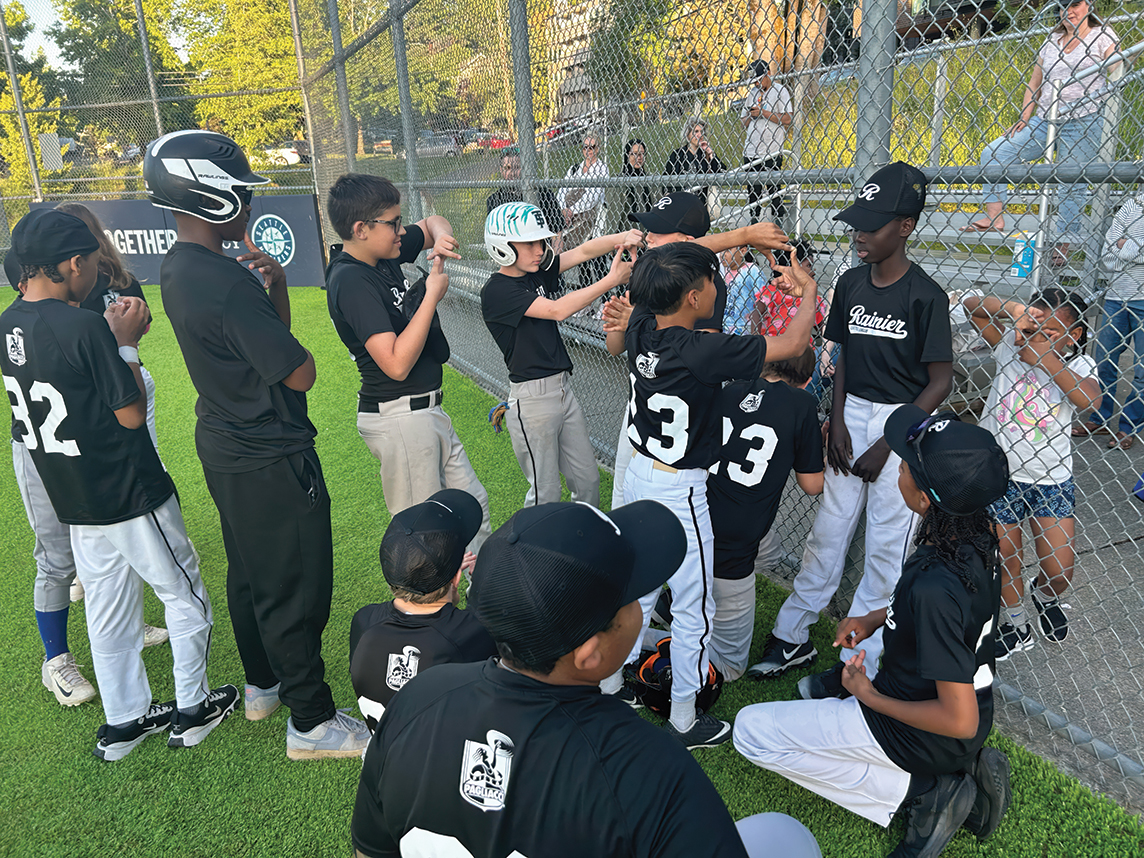
During my 20 years teaching, I’ve spent a lot of time thinking about how young people learn the courage to confront racism. Last year, one of the deepest lessons I’ve witnessed about anti-racist education didn’t happen in a classroom. It happened on a Little League field.
I was coaching a team of 11- and 12-year-olds called the Seattle Steelheads, named after Seattle’s 1946 Negro League team. After our last game, I was convinced I had lived through the greatest Little League season of all time — not because of the incredible victories on the field, but because of the way these youth transformed an act of racism into a lesson in solidarity, courage, and the difficult work of building what Dr. Martin Luther King Jr. called the beloved community.
Our team played in the Rainier District Little League in Seattle’s South End, a community long home to Black, immigrant, and working-class families. Like much of Seattle, the neighborhood has changed dramatically over the past two decades. Rising housing costs and displacement have reshaped who can afford to stay. Fifteen years ago, Rainier District Little League was majority kids of color. Today it is noticeably whiter and wealthier than it once was. In many ways, our Little League reflects the city around it: changing demographics, gentrifying neighborhoods, and enduring questions about who belongs.
Soon, that larger question of belonging became a very practical one for our team. We started with 12 players. Then a 13th asked to join. He had never played organized baseball before. His family had emigrated from Senegal and because his mother worked during our practice time, the only way he could get there was by riding with a teammate. Some coaches hesitate to add a 13th player because it means fewer at-bats for the strongest hitters at the top of the lineup. But I have always believed that youth sports are not primarily about maximizing victories. They are about opening doors. So, I said yes.
None of us knew that decision would shape everything that followed.
PRIME Time
At our first practice, I gathered the team in the outfield and asked a simple question.
“Does anyone know why we’re called the Steelheads?”
“The Joy Stealer,” one of our Black pitchers who already knew some baseball history, raised his hand.
“Because there used to be a Negro League team in Seattle.”
I smiled.
“Exactly.”
Then I asked another question.
“Does anyone know what the Negro Leagues were?”
“The Joy Engine,” one of our white players, said he had seen the movie 42 and knew Black players had created their own league because they weren’t allowed to play in Major League Baseball. “The Diamond Dasher,” whose family is Jewish, talked about Jackie Robinson’s courage and how wrong it was that white players had hurled racist insults at him simply for taking the field. “The Sledgehammer,” one of our hardest hitters, nodded and added quietly, “I’m proud he never gave up.”
Their answers gave us an opening to talk not only about the history of baseball, but about the kind of team we wanted to become. I introduced an acronym I hoped would guide our season:
P.R.I.M.E.
P stands for Pick Each Other Up: No blaming. No shaming. We help each other recover from mistakes.
R stands for Run Everywhere: Hustle isn’t punishment; it’s respect — for the game and for your teammates.
I stands for Intensity: Bring your full attention and effort, whether you’re at the plate, at a practice, or cheering from the dugout.
M stands for Make Mistakes: Baseball is a game built on failure. The best major league players get out seven out of ten times. Even Hall of Famers strike out. The goal isn’t perfection; it’s learning.
And E stands for Enjoy the Game: Joy isn’t something you earn after the final out, it’s what creates the confidence to make mistakes, the resilience to bounce back, and the freedom to become the player — and person — you are capable of becoming.
Our official assistant coach was Matt. His calm presence and knack for seeing what each player could contribute eventually earned him the nickname “Matt the Strat(egist).” Jenny, Justin, and Josh coached alongside us, and all of us had kids on the team. Together, we tried to make PRIME not just words, but the culture of the team.
Building that culture sometimes came at the expense of wins. We were willing to live with that. If you looked at the regular season standings, you may have come under the impression that we weren’t a great team. We finished the regular season with a record of 4 wins, 7 losses, and 2 ties. Two of our players had never played organized baseball before. Several others were only in their second season. We gave everyone equal playing time because we believed development mattered more than victories.
Looking back, those losses became some of our greatest teachers. We had countless opportunities to practice the M in PRIME. Our lockdown center fielder, who would become known as “No Fly Zone,” misjudged a fly ball late in one game that eventually cost us a victory. Nobody blamed him. His teammates surrounded him with encouragement because we had already decided mistakes were part of learning.
Our youngest player, “Ironheart E,” finally lined his first clean hit into the outfield after weeks of struggling. The dugout exploded as though he’d hit a home run in the World Series. “The Ghost Runner” quietly became one of our smartest baserunners, manufacturing runs with his speed. Alongside those players finding their way, a few more experienced kids helped anchor us. “Young Switcha,” my son, had been pitching with both arms since he was 2 and had grown into an effective switch-pitcher. JR, — Matt’s son who would accumulate a string of nicknames including “Mr. Dependable,” “The Base Dancer,” and “The Rattler” — made the routine plays look effortless and made the amazing plays routine.
Every practice and every game became another chance to rehearse the habits we hoped would define us. Looking back, I realize we weren’t just teaching baseball. We were building the habits of a community — habits that would soon be tested in ways none of us could have imagined.
Jackie
Our 13th player, though, was struggling. The boy who would later earn the nickname “Jackie” struck out almost every time he came to the plate. One afternoon, after another difficult game, he walked up to me and asked, “Coach . . . would you come to practice early and work with me?”
I was excited that he wanted to put in extra work, so we began meeting up 45 minutes before practice. Tee work. Soft toss. Bunting. Slowly, he began making solid contact and got a hit in practice. It felt like his breakthrough was coming.
In a late-season game, Jackie finally barreled up a baseball. His line drive screamed toward left-center until one of the league’s best shortstops leapt and stole what would have been his first hit. The crowd erupted in cheers anyway. Parents and teammates recognized what the box score couldn’t: Jackie had turned a corner.
His next time up, with the game hanging in the balance, he laid down a textbook sacrifice bunt. The runner moved to third and scored on the very next at-bat to tie the game. After weeks of arriving early to practice, he delivered exactly what his team needed and saved the game for us.
Yet I noticed that while everyone was celebrating, Jackie looked upset. In the postgame huddle, in front of all the parents and teammates, I gave him the game ball as a memorial to his breakthrough game. But he wouldn’t look me in the eye. After the huddle, I pulled him aside and asked what was wrong. He looked up and said quietly, “Coach . . . a player on the other team called me the N-word.” My eyes filled before I could stop them. I was back in kindergarten, hearing that word from a white person for the first time, telling an adult — and learning, when they did nothing, what it meant not to be protected.
Some memories don’t fade. They wait to ambush you.
I felt devastated that after all his work, the lesson was that he could put in all the effort in the world, but it would never be enough to secure his humanity. If I had known, I would have stopped the game. We would have dealt with it right then or canceled the game altogether. Instead, I went home and wrote to the league demanding clear protocols for racist incidents and mandatory training for coaches on race, institutional racism, and anti-racist practices.
This wasn’t new. Black parents had told me stories over the years about their children not being believed. I had recently been passed over for coaching the all-star team despite being the head coach that took the previous year’s team deeper than they had gone in a decade — not because anyone intended harm, but because few understood what those decisions mean in a sport that stubbornly refuses to hire Black coaches.
Taken together, these moments revealed a harder truth: racism in youth sports is rarely limited to one slur or one child. More often, it lives in the quieter habits of disbelief, exclusion, and silence.
Playoff Magic
Then the season presented us with a question no practice could prepare us for: Our first playoff game was against the very team whose player had called Jackie the N-word.
The league was still investigating the incident, but before the game, I told the other team’s coach I would only feel comfortable playing if he first spoke with his team about the history of the Seattle Steelheads Negro League team, why our players proudly wore that name, and how the racism those players endured made it all the more important that every child on the field today be treated with dignity and respect. To his credit, he took the conversation seriously and treated it as a teachable moment with his players.
It was the kind of response I had hoped for. But it couldn’t erase what had already happened, and once the first pitch was thrown, the emotions of the previous week came rushing back. We quickly fell behind 3–0 and I remember standing in the coaching box thinking. This is how my last Little League season with my son ends? Losing to the team that harmed one of our players and Jackie carrying that weight?
But the kids refused that ending. Our team rallied and in the final inning, “The King of Swing” hit a walk-off double that felt like a giant burden lifted. Jackie’s mom came onto the field after the game with a giant smile and hug for me. “My son needed this,” she told me. “He needed a better lesson than what happened to him.”
The championship game followed a similar improbable script. We fell behind 3–0. Then, one inning at a time, we fought our way back. We carried a one-run lead into the final inning. Their tying run stood on third. Two outs.
The batter connected.
The crack of the bat echoed across the field, and the ball climbed high toward deep center. Our side fell silent. Their side erupted. For a split second, I was certain it was dropping.
No Fly Zone took a few calm steps to his left, settled underneath it, and squeezed it into his glove. The same player whose dropped fly ball had cost us a game during the regular season had just secured the championship.
Then pandemonium. Hats flew in the air. Kids poured out of the dugout. Parents screamed. Someone dumped a cooler of ice water over my head. I was soaked, laughing, crying, and hugging anyone within reach.
We were champions. Had the story ended there, it would have been one of the sweetest moments of my life. But the most important chapter of our season was yet to be written.
If we expect children to build a more just community, we have to be willing to change our institutions alongside them.
Becoming a Beloved Team
Winning the Rainier District championship qualified us for the Tournament of Champions, where the best Little League teams from across South Seattle compete to determine the city’s south-end champion — the farthest a regular season Little League team can go.
Before our first practice, I asked Jackie and his mom if I could share with the team what had happened. They both said yes. It was important to them for everyone to know.
I gathered the Steelheads in a circle in the outfield and told them that Jackie had been called the N-word by an opposing player. The circle went quiet.
Then something remarkable happened. Two players — one Black and one white — admitted that when Jackie first told them what had happened, they didn’t believe him. Standing in front of their teammates, they apologized. Another player said he had noticed more kids using racist slurs lately and wondered if it had something to do with the way politicians had been talking about race.
Then my son looked directly at Jackie and said, “We’ve got your back.” One by one, every player spoke. They talked about fairness, friendship, and what kind of team they wanted to be. By the time the circle ended, something had shifted.
The P in PRIME — Pick Each Other Up — had taken on a whole new meaning. It was no longer about encouraging a teammate after a strikeout or an error. It meant believing someone when they told you they’d been harmed. It meant taking responsibility when you got something wrong. It meant refusing to let a teammate carry pain by himself.
As I listened, I realized I wasn’t simply coaching baseball anymore. I was watching 12-year-olds teach one another about beloved community. But I also wanted them to know something just as important: Building that community wasn’t their responsibility alone.
I told the team that my wife Sarah — our scorekeeper and the organizational force behind so much of what our team accomplished, nicknamed “Vision and Execution” — had already reached out to the Center for Healing and Justice in Sports to help our league provide training for coaches and players around race, belonging, and creating inclusive teams.
I wanted the players to understand that while they were showing tremendous courage by standing with Jackie, the adults had responsibilities too. If we expect children to build a more just community, we have to be willing to change our institutions alongside them. Only then did we pick up our gloves and begin preparing for the biggest baseball tournament of their young lives.
In the Tournament of Champions opener, we made our signature move of falling behind 3-0. I thought, we aren’t going to overcome a three-run deficit for the third game in a row. But again, we rallied.
Then came the moment no one could script. Bottom of the final inning, game tied, Jackie at the plate. He hadn’t recorded a hit all season. A fastball left the pitcher’s hand and he crushed the deepest ball any of our players hit all year — a shot over the outfielder’s head that made it to the fence to score the winning run. A boy who had been told, in the ugliest way, that he didn’t belong rose with courage, refused to be diminished, and drew an entire team to rise beside him.
The next game brought another unlikely hero. Our primary pitchers were unavailable because they had reached their Little League pitch-count limits, so we turned to a player who had struggled on the mound during the regular season. He responded with a magnificent outing, throwing a complete-game shutout and striking out 13 batters. By the final out, he had earned a new nickname: Zeros. For the first time in the playoffs, we didn’t have to claw our way back from a 3-0 deficit. My blood pressure certainly benefited.
Then came the final game.
The Championship
Before the championship game began, something happened that hadn’t happened at any of our games all season: The national anthem began to play over the loudspeakers at Rainier Playfield. I don’t stand for the anthem, but this time I hesitated before taking a knee. I worried that parents might think I was trying to impose my politics on their children.
I thought of my friend Michael Bennett, the Seattle Seahawks Super Bowl champion who had supported our launching of the Black Lives Matter at School movement. I remembered our conversations before he decided to join Colin Kaepernick’s protest in the NFL. He knew what was coming: the hate mail, the death threats, the accusations that he was unpatriotic. He knelt anyway because he believed some things mattered more than comfort.
Then I thought about my own Garfield High School students who had done the same. Jalani Howard from the football team and Janelle Gary from the softball team had faced boos, threats, and ridicule after kneeling during the anthem. They had become my teachers.
I took a knee.
Almost immediately, No Fly Zone who was standing by my side, looked over at me.
“Coach . . . what are you doing?”
I explained that Colin Kaepernick and Michael Bennett had knelt to protest racism and affirm that Black lives matter.
“I remember that,” he said. “And I just learned there’s another verse of the national anthem they don’t usually sing because it supports slavery.”
“You’re right,” I replied.
Without another word, he dropped to one knee beside me.
Then another player knelt. Then another. Like a ripple spreading across still water, the entire Steelheads team lowered to one knee together.
At that moment, I felt we had already won. Whatever the scoreboard would eventually say, this team had learned the lesson I had hoped baseball would teach them all season: True champions are defined not only by the games they win, but by the people they choose to become.
Then I looked across the field. The Highline Phillies had rolled into the championship game with a 22-2 record. Their pitcher was warming up, firing rockets. From our dugout, he looked almost as tall as I was. I briefly wondered whether my newfound peace with whatever happened next was genuine wisdom — or simply a coping mechanism for the drubbing I was sure was about to end our magical postseason run.
The game quickly became another test of our resilience. We jumped in front when Young Switcha lashed a triple into the left-field corner and the King of Swing grounded out to bring him home. But the Phillies answered, and before long the score was tied.
Our pitcher, the Joy Stealer, blanked the Phillies for more than four innings, carrying us through the regulation six innings and into extras. In the top of the seventh — the first extra inning in Little League — they scratched across an unearned run to take a 4-3 lead, but our dugout stayed calm. This was PRIME in action — intense, focused, and confident.
Leading off the bottom of the seventh, “the Barehanded Bandit” jogged over from the batter’s box.
“Coach . . . should I do it?”
“Go for it.”
His eyes filled with tears as he asked, “What if I can’t?”
“Then you’ll be living our motto,” I said. “Make mistakes. You’re 12 years old. The sun is shining. Enjoy this game.”
He smiled, squared to bunt, and deadened the ball perfectly up the first-base line. The rushed throw sailed wide of first. Without breaking stride, he raced all the way to third for an astonishing bunt triple — his second in as many games. Moments later, he sprinted home on a ball in the dirt to tie the game and keep our season alive.
One inning later, with Jackie standing on second, the Base Dancer ripped a line drive into the gap.
Jackie rounded third.
The kid who had never played baseball before this season.
The kid who had been called the N-word and refused to shrink.
The kid who had earned this moment.
He slid safely across home plate and the field erupted.
Water flew. Parents screamed. Coaches embraced. Kids collapsed into one another’s arms. I raced to home plate, scooped Jackie into the air, and spun him around as we laughed and cried together.
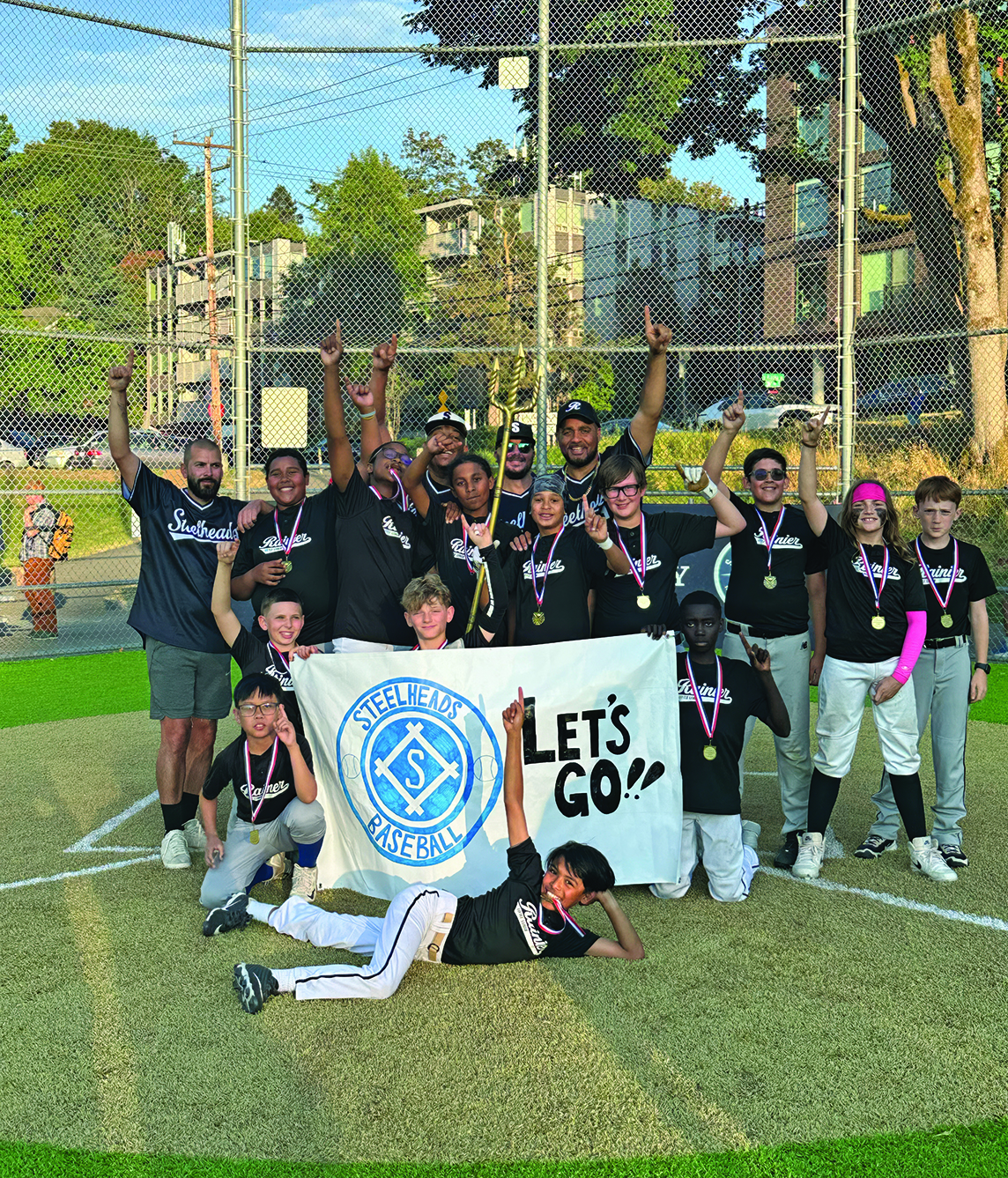
Steelheads 5. Highline Phillies 4.
We weren’t just champions of our league. We were living proof that when young people are taught to choose courage over fear, solidarity over silence, and joy over despair, they become champions in ways that matter long after the final score is forgotten.
More Than the Score
By the time the season ended, the most important thing the Steelheads had changed wasn’t their place in the standings. It was what would happen the next time a child was harmed. Children who have never met the Steelheads, who do not know Jackie’s story and may never know our names, will one day step onto these same fields. And when they do, the adults around them will be better prepared to recognize racism, to confront it, and to protect a child’s dignity when it is threatened. They will inherit something this team fought to create.
For one remarkable season, the baseball diamond became a classroom where children practiced courage, solidarity, and belonging. The lesson was not that racism can be defeated in an afternoon, or that we could make injustice disappear. The harder lesson was this: When someone is harmed, we have a choice. We can look away. Or we can believe one another. We can tell the truth about what happened. And then we can change the conditions that allowed it to happen in the first place.
Few teams win championships. Fewer championship teams leave the game better than they found it.
That’s what made this the greatest Little League season of all time.