Our picks for books, videos, websites, and other social justice resources 40.3

Picture Books
Granny Came Here on the Empire
Windrush
By Patrice Lawrence
Illustrated by Camilla Sucre
(Nosy Crow, 2025)
40 pp.
Young Ava learns from her beloved grandmother about the Windrush generation in England — Caribbean immigrants from post-WWII to the 1970s. In age-appropriate language and with stunning illustrations, her grandmother describes the racism they faced and how they built a community among family and friends. In a school assembly about people who have made a difference in the world, Ava chooses to represent her grandmother. Ava passes on to the audience England’s immigration history and the recognition that we don’t need to look far to find powerful people with stories to be told.
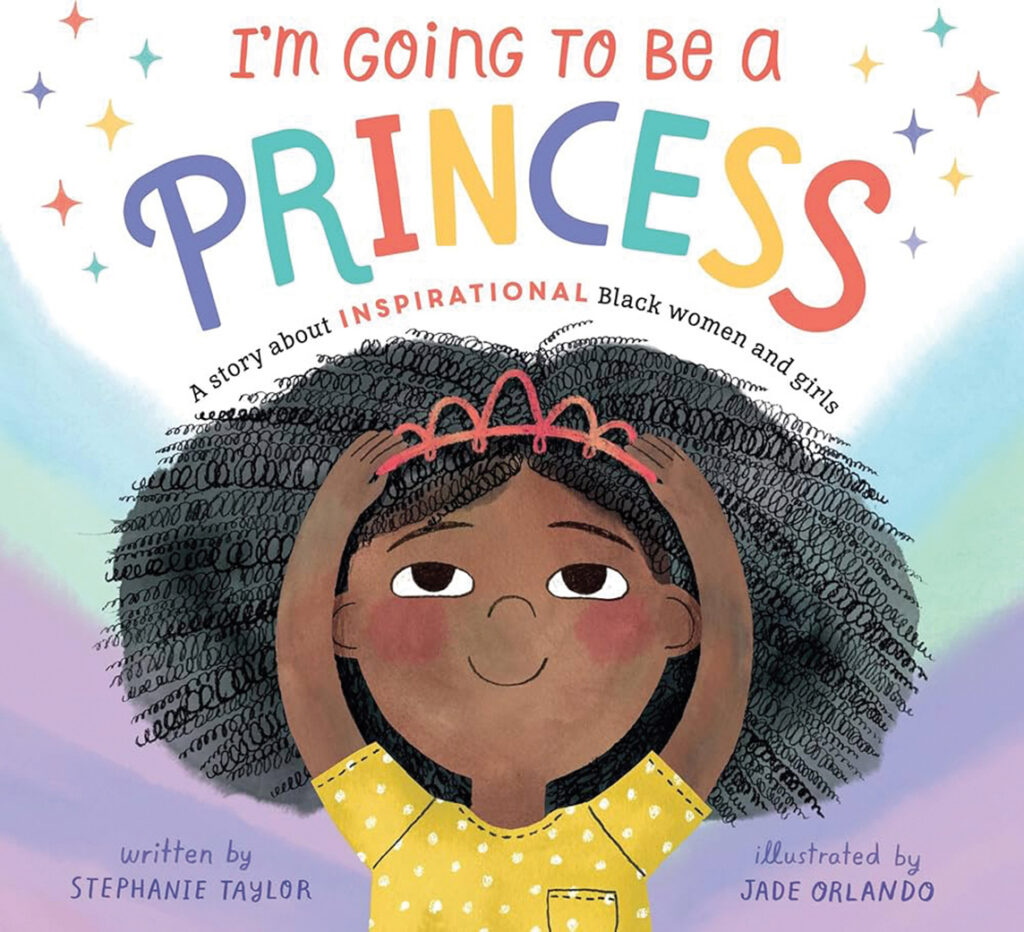
I’m Going to Be a Princess
By Stephanie Taylor
Illustrated by Jade Orlando
(Nosy Crow, 2023)
32 pp.
On their way home from school, Maya exasperates her feminist mother with claims she wants to be a princess when she grows up. As they walk through town, Maya’s mother gently suggests other professions that would connect with Maya’s interests — such as being a surgeon, author, dancer, or veterinarian. With each role, she describes a Black woman who has impacted the field. This is a creative way for young readers to learn about Alexa Canady, Misty Copeland, and other Black women of note. Maya concurs that they are impressive, while steadfast in her goal. When asked why, she explains that she wants to be like Princess Amina from the Zazzau Kingdom in West Africa, introducing readers to another historic figure in Black history — to the relief of her mother. The illustrations are as playful as the story.
Curriculum
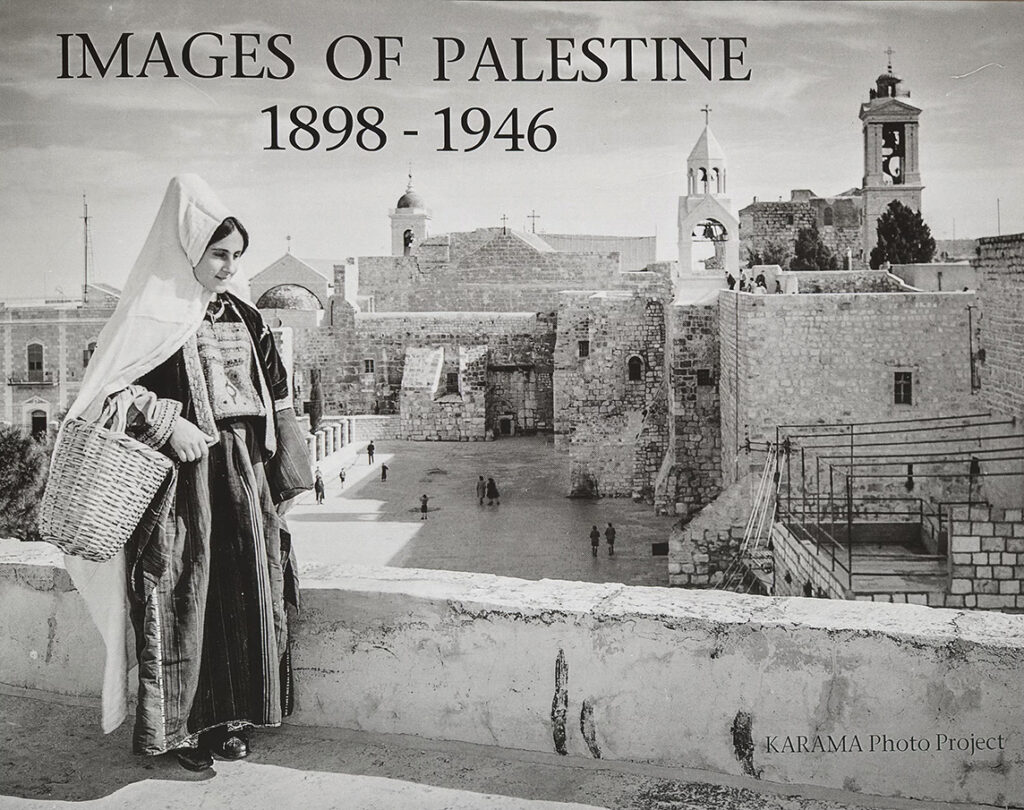
Images of Palestine: 1898 – 1946
KARAMA Photo Project
Companion Guide by Jennings Mergenthal and Jaime Hokanson
(Palestinephotoproject.org; karamanow.org; 2023)
219 pp.
This remarkable and lovingly assembled book of photographs from Palestine includes an excerpt from a poem by Mahmoud Darwish:
This land is the skin on my bones,
And my heart
Flies above its grasses like a bee.
Both land and heart come to life in this volume, edited from more than 23,000 negatives, transparencies, and prints. The book presents a rich portrait of Palestine immediately before the 1948 Nakba — catastrophe in Arabic — in which Israel expelled more than 750,000 Palestinians. Images of Palestine should find a home in every high school library, as it definitively punctures the myth that before the state of Israel, Palestine was “a land without a people for a people without a land.” The book is a visual introduction, focusing on both rural and urban life in Palestine: schools, harvest time, soap manufacturing, fishermen. Especially valuable is the book’s section on “Occupation and Resistance” — British soldiers posed in Jenin following their 1938 destruction of the city, Palestinian civilians being searched in Jaffa in 1936, hundreds of Palestinians taking an oath to resist British occupation and Zionist immigration, Jerusalem merchants on strike against the British in 1929. Images of Palestine is a treasure for educators hoping to bring Palestinian history to students.
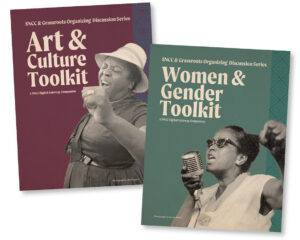
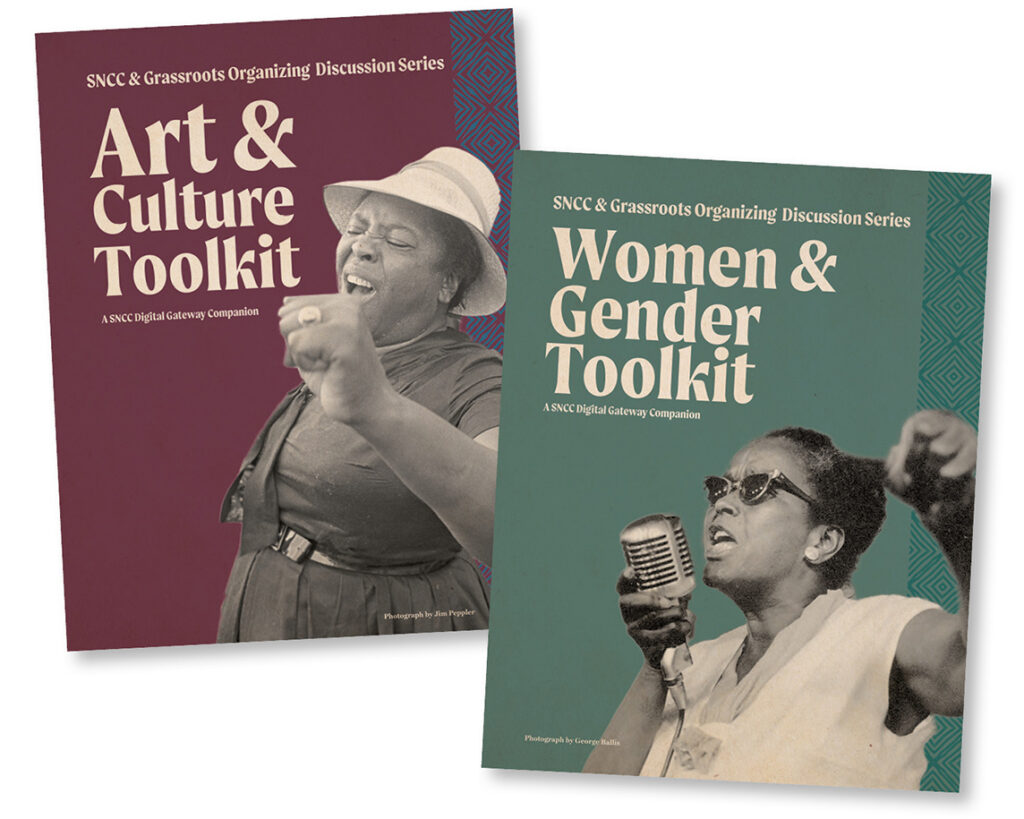
SNCC Legacy Project Toolkits
By the SNCC Legacy Project
(2025)
Six toolkits
As we look for strategies to challenge fascism today, we can learn a lot from the work of the youth-led Student Nonviolent Coordinating Committee (SNCC) in the 1960s. The SNCC Legacy Project has produced six free-to-download toolkits. Each has primary documents, narrative history, photos, and discussion questions. Topics include voting rights, women & gender, freedom teaching, art & culture, Black power, and the organizing tradition. At the Zinn Education Project, coordinated by Rethinking Schools and Teaching for Change, we feature stories from teachers and students who have used the SNCC materials. As Todd Christensen, a U.S. history teacher in Burlington, North Carolina, wrote: The toolkits “introduce a new, dynamic cast of characters who worked outside of the limelight in the fight for racial equality and justice. They illuminate the grassroots organizing tradition that propelled the movement forward long before and after the activism of the 1950s and 1960s. My students become enamored with SNCC — its workers, its methodology, and its philosophy and ideals. They feel empowered learning that young people — not much older than themselves — profoundly impacted history.”
History / Politics
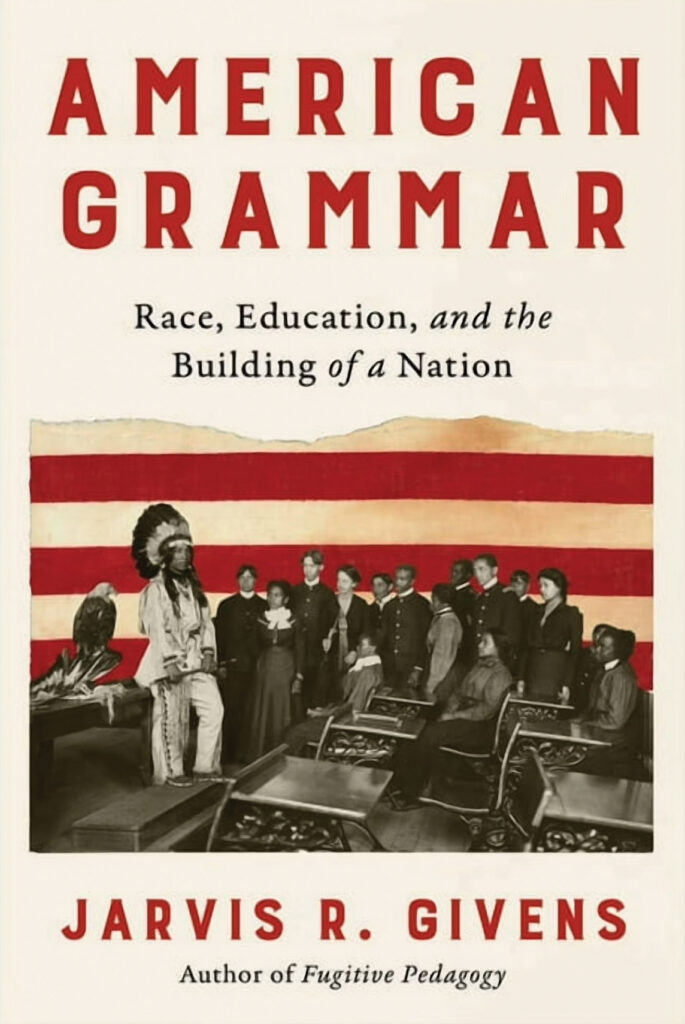
American Grammar: Race, Education, and the Building of a Nation
By Jarvis R. Givens
(HarperCollins, 2025)
352 pp.
American Grammar is a profound and necessary intervention into how we understand race, power, and schooling in the United States. By examining Black and Indigenous histories of education, Jarvis Givens asks readers to see education as a grammatical phenomenon — structural, contextual, and historically patterned. Like grammar in language, the organizing rules of schooling often go unnoticed, even as they shape meaning and life chances.
Rejecting narratives that frame educational injustice as exclusion, Givens urges us to understand it instead as domination. The problem has not been that Black and Indigenous peoples were outside U.S. education, but that they were forcibly incorporated into systems designed to manage, discipline, and exploit. As Givens writes, “Early architects of American schooling were highly race-conscious when it came to education, and their interactions with racialized others played a crucial role in shaping the future of schooling.” Native boarding schools, Jim Crow schooling, and industrial education were core features of the U.S. education system that was built on a foundation of chattel slavery and settler colonialism.
American Grammar also issues a moral and political demand: If education helped produce a world so deeply stratified by race, then healing requires tracing harm to its source. By offering a new origin story of U.S. education — one that names power, violence, and political economy — Givens equips educators to move beyond superficial inclusion toward justice-oriented repair.