Our picks for books, videos, websites, and other social justice resources 40.2

Picture Books
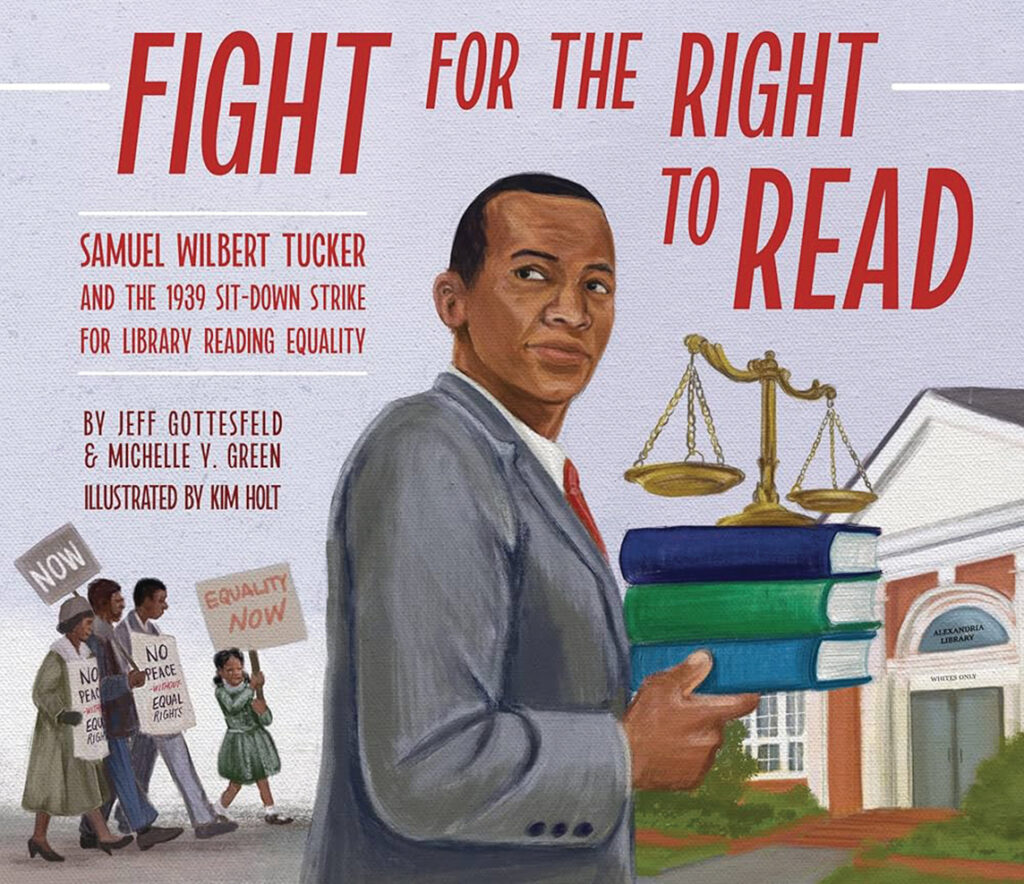
Fight for the Right to Read: Samuel Wilbert Tucker and the 1939 Sit-Down Strike for Library Reading Equality
By Jeff Gottesfeld and Michelle Y. Green
Illustrated by Kim Holt
(Creston Books, 2025)
32 pp.
Did you know that one of the early sit-ins was not a lunch counter in the 1960s, but instead in a library in 1939? (Just two years after the sit-down strike in Flint, Michigan.) Self-taught lawyer Samuel Wilbert Tucker recruited five brave young Black men to peacefully enter the “public” library in Alexandria, Virginia. One by one they selected a book off the shelves and sat down to read. When the police escorted them out, there were hundreds of people and reporters standing outside. Tucker had alerted the media to make the arrests visible. Through public actions and the courts, Black residents of Alexandria protested that their tax dollars paid for a library they could not access. In that pre-internet era, libraries were often the only place to access a wide range of information. To fight against book bans at schools and public libraries today, students can learn strategies from this decades-old act of civil disobedience.
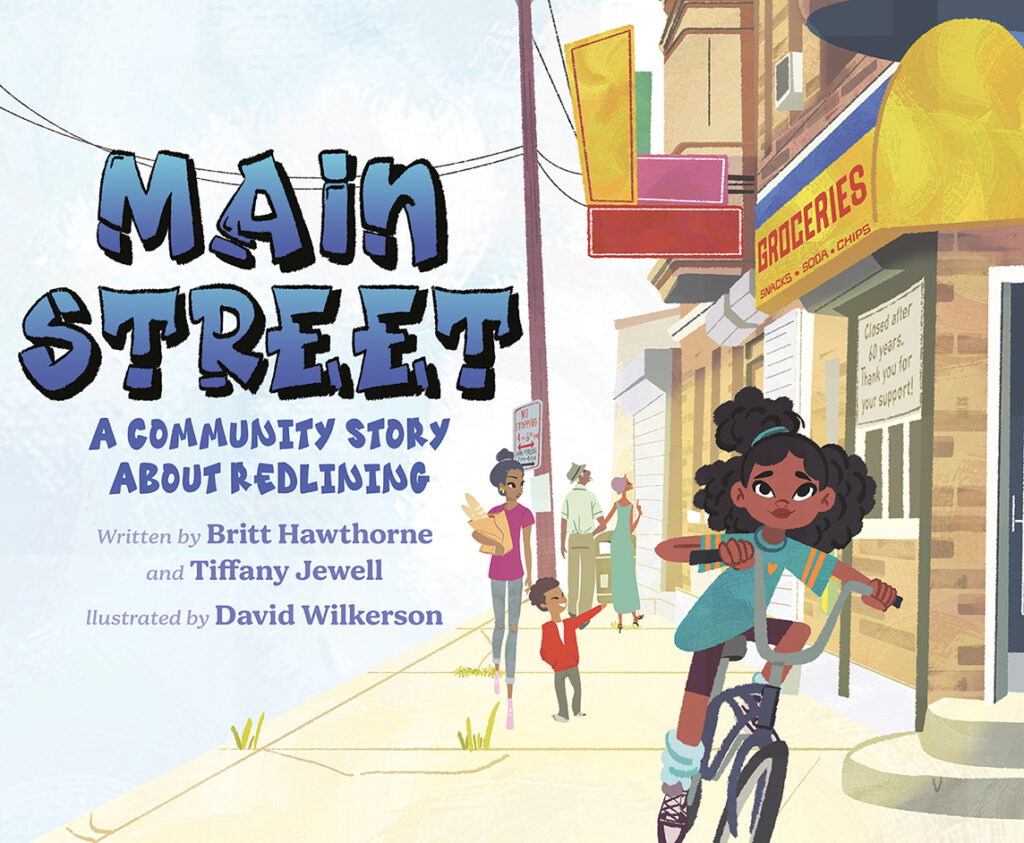
Main Street: A Community Story About Redlining
By Britt Hawthorne and Tiffany Jewell
Illustrated by David Wilkerson
(Penguin Random House, 2026)
40 pp.
Main Street: A Community Story About Redlining follows Olivia, a young girl excited about inviting her friends to the annual block party on Main Street where she lives. One of her friends claims that Main Street isn’t safe, and Olivia, upset, turns to her neighbor, an elder named Ms. Effie. Ms. Effie details the history of Main Street, including how the bank wouldn’t give them a loan to buy their house on Main Street. Ms. Effie and Olivia analyze where Main Street lies on a color-coded map to discuss redlining, and Ms. Effie tells Olivia how she and her neighbors organized to save money to buy homes and businesses on Main Street. The book is a beautiful story about what happens when neighbors come together to preserve and protect their communities. The book also addresses how redlining is a function of racism, and how the government constructed insidious, false, harmful narratives about predominantly Black, Brown, Jewish, and immigrant communities to deny investment in growing these communities. The book offers tangible ways for younger learners to talk about redlining, racism, and community organizing.
Curriculum
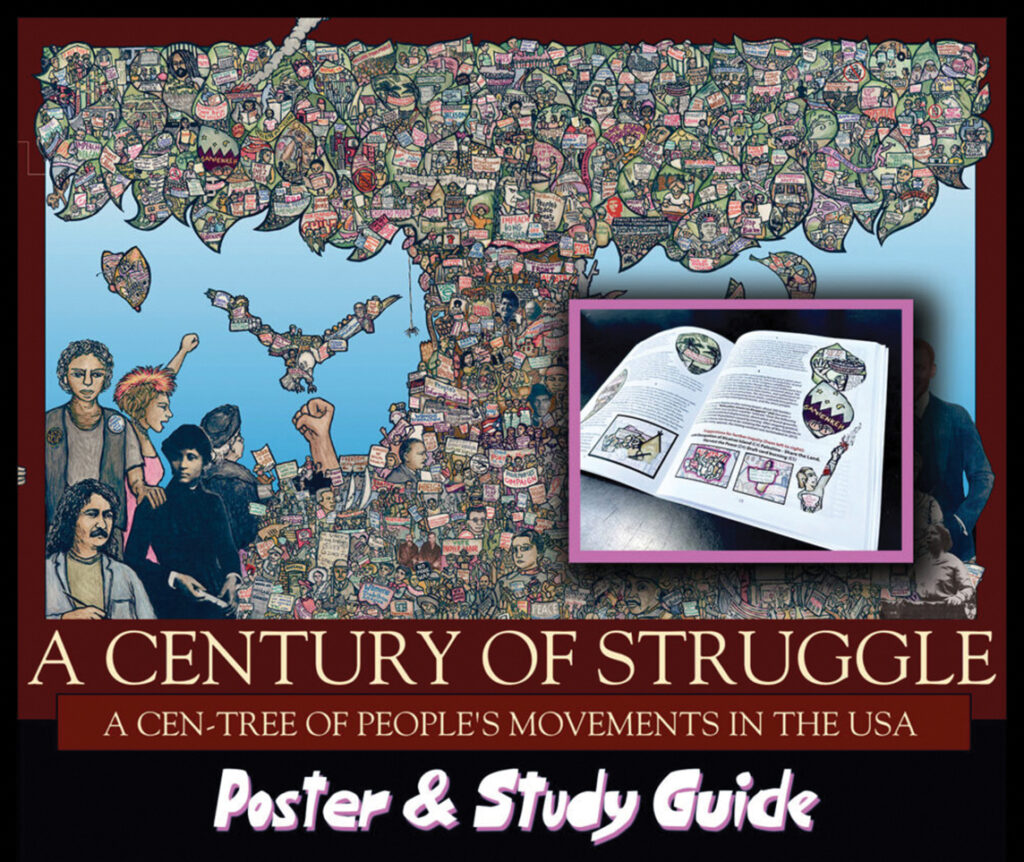
A Century of Struggle: A Cen-Tree of People’s Movements
in the USA
By Ricardo Levins Morales and Janna Schneider
Companion Guide by Jennings Mergenthal and Jaime Hokanson
(RLMArtStudio.com; 2025)
Companion study guide: 50 pp.
Ricardo Levins Morales and Janna Schneider’s remarkable and classroom-friendly “Century of Struggle” poster was originally published by the Northland Poster Collective in 2000. It is a “Cen-tree” collage featuring more than 700 illustrations celebrating the history of 20th-century U.S. social movements. The new guide to the poster offers a few reflection questions, but mostly, it helps locate and identify individuals and movements included. The guide is organized into 10 sections: Cultural Work, Right to Remain, Gay Liberation, Faces of Struggle, Electoral Activism, Strikes, Rural Organizing, Political Prisoners, the ’76 Bicentennial, and Anti-Globalization. Each entry — e.g., the AIDS Quilt, the International Hotel struggle, Wounded Knee, ACT UP, Lucy Parsons, Septima Clark, Mississippi Freedom Democratic Party, the Seattle Ladies Tailor Strike, the Harlem Tenants Strike, Southern Tenant Farmers Union, Black Panther Party, and the “Battle of Seattle” — gets coordinates on the locator grid to help students and teachers identify individuals, movements, and events. Great for art or history classes, or for anyone who wants to be reminded about the magnificent people’s history of the 20th century.
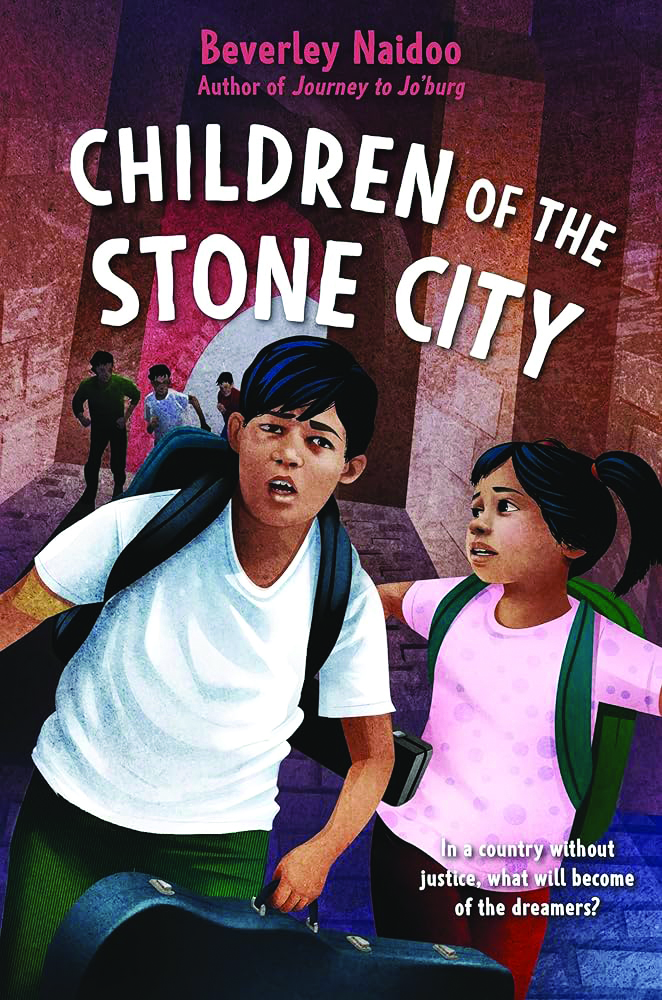
Children of the Stone City
By Beverley Naidoo
(Quill Tree Books, 2022)
220 pp.
During the gloomiest days of South African apartheid, one of the best and most widely read novels for young people on the struggle there was Beverley Naidoo’s Journey to Jo’Burg. Decades later, Naidoo is back with a young reader’s novel set in another apartheid society: Israel-Palestine. The book is allegorical and never mentions Palestine or Israel. Instead, Children of the Stone City describes the privileged lives of the “Permitteds” and their subjugation of the “Nons,” who live in Stone City. The youngsters at the heart of the story, Adam and Leila, have to maneuver through the alleys of Stone City, avoiding Permitted police as well as Permitted youngsters, who lord their privilege and power over Nons in numerous ways. As stark as the inequality is, this is not a tale of unrelieved oppression. Adam and Leila are musicians, and their family and larger community are sites of warmth and camaraderie. Together, they keep alive memories of the Time Before. Adam’s father, an archeologist, had given him a book of folktales, and inscribed: “Like bits of pottery we find in the earth, they tell us something about the people who made them.” And when Adam’s best friend, Zak, is arrested by Permitted police on trumped-up attempted murder charges, the Permitted human rights lawyer, Lily Roth, shows that there can be solidarity between Permitteds and Nons. Without the mention of Palestine, Naidoo introduces young readers to Palestinian social reality, and the song of defiance that resonates from the Time Before until today.
History / Politics
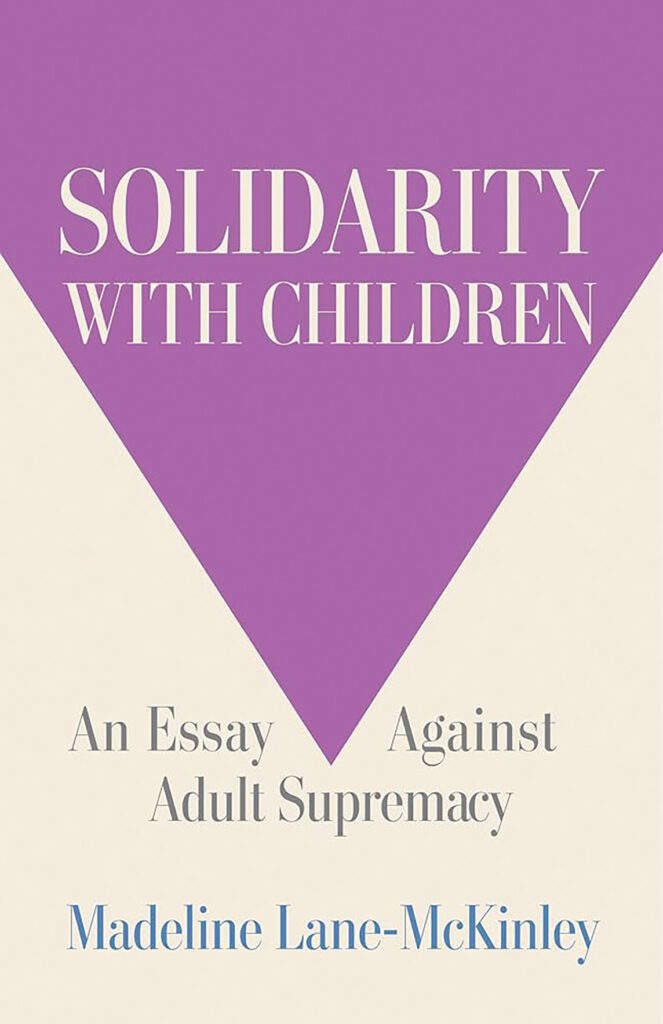
Solidarity with Children: An Essay Against Adult Supremacy
By Madeline Lane-McKinley
(Haymarket, 2025)
192 pp.
The word essay comes from the French word “essai,” which means an attempt or effort. This short, five-chapter book is exactly that: a provocative attempt to theorize child oppression under capitalism, utilizing some of the best feminist scholarship on the nuclear family, mothering, and child liberation. Whether it’s restricting access to what students can learn about, separating immigrant children from their families, starving Gazan children, or making all children’s futures precarious by refusing to address the climate crisis — McKinley shines a light on a world where who gets to enjoy “childhood” is determined by access to wealth. Yet even so, “under the conditions of childhood” McKinley argues, “one has very few rights and very constricted forms of autonomy.” She points to how demanding a world that is free from oppression and exploitation is often shut down as “childish” or “utopian.” Instead, McKinley challenges us to pursue a politics of solidarity that embraces “childish utopianism” as something desperately needed in this moment. “If the crises are ongoing, and shared by all of us,” McKinley writes, “then we will need multigenerational struggles, but also non-generational thinking, in order to meet them head-on.”
The AI Con: How to Fight Big Tech’s Hype and Create the Future We Want
By Emily M. Bender and Alex Hanna
(Harper, 2025)
288 pp.
What is a “Luddite,” really? In today’s parlance, it’s an insulting term for a person who opposes or resists learning new technologies. But Emily M. Bender and Alex Hanna champion the Luddite tradition of workers — dating back to England’s Industrial Revolution — who were “against technologies of control and coercion, and concerned about the loss of jobs, health, and community.” The AI Con: How to Fight Big Tech’s Hype and Create the Future We Want encourages readers to take up the Luddite politics of refusal as they face down the pernicious, deceptive glorification of “artificial intelligence” across all areas of life. As Bender and Hanna explain, “AI” is not a coherent set of technologies, but a marketing term trotted out by Big Tech companies and venture capitalists to “profit from getting others to believe that their technology is similar to humans, able to do things that, in fact, intrinsically require human judgment, perception, or creativity.” The AI Con lifts the curtain of hype to reveal the inner workings and deep harms of “AI” automation machines in gig work, government, journalism, law, health care, science, art, and education. Bender and Hanna also offer strategies for resisting “AI” aggrandizement and shaping technologies that actually benefit people. The AI Con is a clear, smart, surprisingly funny primer on how and why to embrace 21st-century Luddite-hood, in and beyond the classroom.