Not “Burdens” or “Saviors”:
Picking Children’s Books Showcasing the Autistic Experience
When I was growing up, I always knew that I was different from other kids. Other kids thought differently from me; they enjoyed textures that made my skin crawl, and my intense, specific passions for dinosaurs and comics stood out when compared to others. Without other options, I ended up pushing those differences down, doing the best to sand off the rough edges of my existence to fit in with my peers.
That is, until my sophomore year in college, when, amid a pandemic and massive personal upheaval, I was diagnosed as autistic. Suddenly, so much of my life made sense. Many of the traits that I’d struggled to hide in order to fit in with my neurotypical peers suddenly came into focus as aspects of being autistic. It’s hard to describe the emotions that came to me after such a monumental paradigm shift, but it’s safe to say that after the rush of relief I felt, the anger came quickly.
I was angry that my whole life I’d been tacitly educated that autism was a bad thing, that it was debilitating and disgusting. I was angry about how everyone around me acted like autism was a dirty word and how they insisted that I couldn’t be autistic because I was “too normal.” But mostly, I was angry that there had been no effort to educate me about a neurodivergence that nearly one in 36 people are diagnosed with and that I’d been subconsciously hiding my whole life.
It’s this glaring lack of education around autism that I want to address in this article. There’s an unwillingness to dig into autism in our educational system that directly contributes to the further stigmatization of the autistic experience, and it exists at every level of the system. Having taken many classes on social justice and equity, I can say that autism (and neurodivergence, in general) isn’t talked about even in some of the most progressive curriculums. Many courses include units on disability advocacy but only mention those with a physical disability. While these are vital conversations to be had, they leave half of the disabled community out in the cold.
While addressing the lack of education on autism in collegiate courses on social justice would be a start, the problem needs to be addressed from the ground up. As I found while reviewing children’s literature during my capstone project and continuing that work while interning at Reading is Resistance, children’s literature provides a unique opportunity to educate kids on autism before they’ve been exposed to the harmful misinformation that remains unchallenged in the public mind.
Autism is many things, but it certainly isn’t simple. It’s a spectrum of traits that range from difficulty reading social cues to sensory issues that deeply affect an autistic individual’s experience living in a world built to center the neurotypical experience. Being autistic comes with many upsides and downsides, many of which are hard to properly explain to someone who’s never had contact with autistic folks. Perhaps this is part of the reason why autistic representation in media has historically been lacking.
There are, however, books that can teach both neurotypical and neurodivergent kids about autistic people and help to fight the stigma around autism.
Pick books that fight back against harmful stereotypes.
Autism (and neurodivergence in general) is stigmatized in our culture. It is safe to say that most of what our culture believes to be true about autism is off base, and some children’s stories can portray autism as something it isn’t.
One of the most harmful stereotypes to look out for is the myth that all autistic people are incredibly gifted. This is reinforced by many of the most popular stories about autism. Stories like Rain Man and A Beautiful Mind show us a portrait of autism that represents the experiences of only about one in 10 autistic people. While these films showcase aspects of the autistic experience, the oversaturation of the savant in stories about autism signals that extreme intelligence is one of the main traits most autistic people share.
Related to the idea of the autistic savant is a tendency to describe autism as a superpower. This sentiment comes from the fact that many autistic people have above average skill sets and knowledge in areas in which they are interested, often called their special interests. The superpower narrative often erases the most challenging aspects of being autistic, portraying autism as solely a boon to the autistic individual. Autism is difficult. It can affect executive functioning, the ability to interact with family and peers, and can lead to intense burnout. The autistic experience is not a solely positive one and shouldn’t be portrayed as one. Thoughtful autistic representation should showcase the range of experiences that an individual can have.
Pick books where characters aren’t defined by their neurodivergence.
Characters in children’s stories can be overly simplified. Often, characters will exist to the reader solely as their role in the story. Characters like teachers, friends, parents, siblings, and strangers are easily explained to kids, so it’s easiest to define them by their roles. This can quickly become a problem when dealing with portraying lived experiences that may differ from the readers or author, as it can reduce characters to their difference. In the case of autistic representation, it is easy to present an autistic character as only autistic, without a personality outside of their neurodivergence.
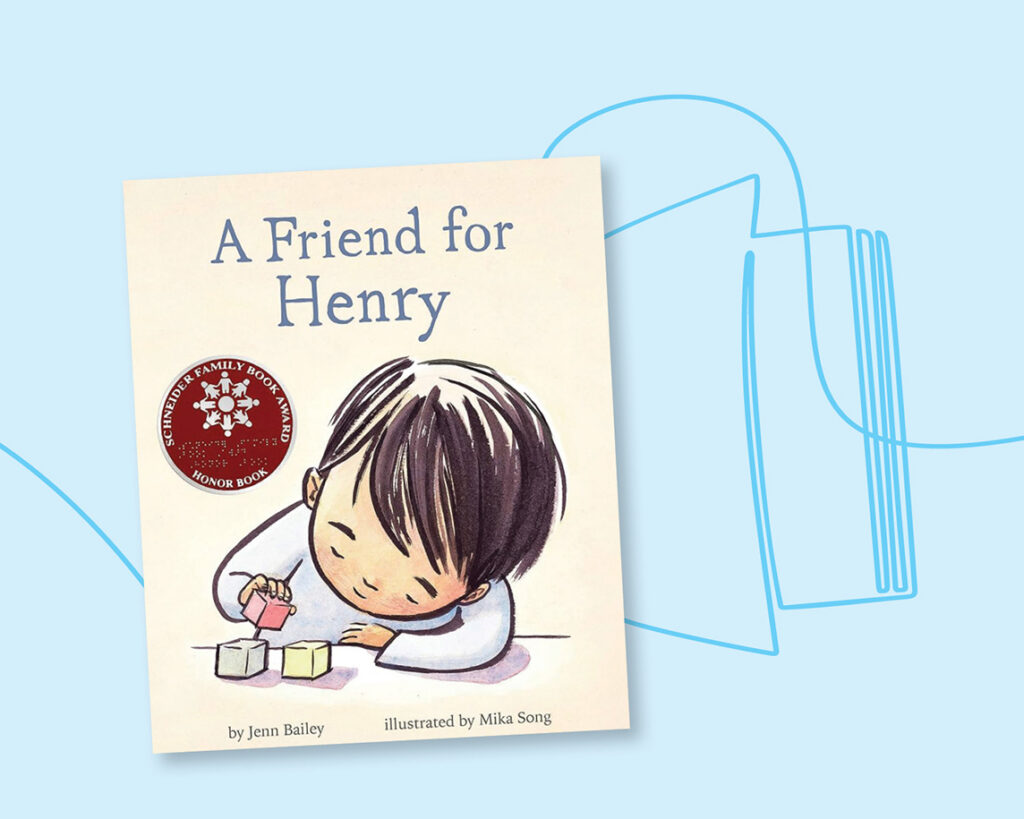
That’s why it’s important to select books that showcase autistic characters as individuals and not just a collection of autistic traits. Well-rounded autistic characters show interests, goals, and wants. Flat autistic characters read like a case study, listing out their autistic traits like you’re reading from a diagnostic manual. Keeping an eye out for well-rounded autistic characters not only fights against tokenization and the reduction of autism, but also helps to endear readers to autistic characters and shows them that autistic people are human beings who aren’t solely defined by their difference. Benny Doesn’t Like to Be Hugged, by Zetta Elliott and Purple Wong, and A Friend for Henry, by Jenn Bailey and Mika Song, are examples of children’s books with well-rounded autistic characters.
Choose stories that explicitly say that characters are autistic.
If one goal of autistic representation is to educate children about autism, to make autistic kids feel seen, and to show kids how differences should be accepted, it should be a priority to select stories that explicitly mention autism in the text. Most children’s books about autistic children never textually mention autism or label autistic characters as such, which ends up undercutting the story’s message.
Many children’s books, even books I just cited like Benny Doesn’t Like to Be Hugged and A Friend for Henry as examples of positive representation, fall short of explicitly mentioning autism in the story. Instead, authors choose other words as signifiers that characters are autistic. Autistic characters are “special,” “unique,” and they “think differently from you or me.”
Autism is many things, but it is autism. By labeling autistic characters with markers that imply that a character’s autistic, a story ends up othering those characters while denying readers a chance to learn about autism. Vaguely maneuvering around the word autism stigmatizes the experience that stories set out to portray. Children need the vocabulary to have honest conversations, and they deserve adults comfortable having those conversations.
The Amazing Erik, by Mike Huber and Joseph Cowman, is a good example of a book weakened by not textually mentioning the main character’s autism. In the book, a young boy in a wheelchair named Erik struggles with sensory issues, which should be a pretty standard story. The problem? Without textually addressing the character’s disabilities, the reader is left to wonder what Erik’s deal is, further stigmatizing neurodivergence.
Not textually mentioning autism isn’t a deal breaker as long as stories are presented to children by an adult who explicitly discusses autism with them. Many books don’t mention autism in the text of their stories but do mention it in the author’s note, which can be an important teaching resource.
Pick books that model excellent allyship.
When picking a book representing autistic characters (or really any character from a marginalized/oppressed group) models of allyship should be one of the first things to look for. Allyship and empathy for different lived experiences is an important lesson that kids take away from anti-bias curriculum, so it’s important to showcase allyship at its finest.
Most books that feature an autistic character, especially those where the autistic character isn’t the main character, feature examples of allyship. The plots of most of these stories feature a neurotypical character befriending an autistic character and accommodating their new friend’s needs, ultimately discovering that their differences don’t mean that they’re completely separate. Special attention should be given to stories where peers accommodate sensory issues, as it’s one of the easiest and most effective methods of practicing allyship for autistic friends.
Another key thing to look out for is adults in these stories who practice effective allyship. Many stories show what kids can do for each other to help support autistic peers but stop short of modeling the behavior that a teacher or parent can practice to be good allies. Being a good ally to an autistic kid can include asking for consent before touching someone or their things, accommodating sensory needs, learning a non-verbal kid’s specific method of communicating, advocating for autistic people, and other actions of love and respect.
If you’re looking for books that model allyship, Benji, The Bad Day, and Me, by Sally J. Pla and Ken Min, is a good place to start. The book features an honest and touching depiction of what it’s like to be an ally to a family member, even on bad days.
* * *
I wish that I’d had any education about autism when I was growing up. A single lesson from my teachers or my parents would’ve given me the information to recognize the parts of me I felt I had to hide and led me to embrace those aspects of myself. If I had been given a single story as a child, it all would have been different. Instead, because of the stigmatization of autism and the lack of information available to me, I spent more than two decades trying to change parts of myself that don’t need to be changed. Autism is many things, but above all, it’s beautiful. Being autistic is beautiful, and because I didn’t have stories mirroring my existence, it took me 22 years to figure that out. By picking children’s books containing thoughtful autistic representation, we can make sure that the next generation is equipped to find that beauty in themselves and their peers.