Don’t Make Students Love America — Teach Them to Question It
“We are gonna make our kids love America again. Make them think fondly of the heroes that built our country.”
That’s how the late Charlie Kirk — former head of Turning Point USA and a prominent conservative activist — celebrated Donald Trump’s 2020 launch of the 1776 Commission and its charge to impose what he called “patriotic education.”
It’s a revealing statement. “We are gonna make our kids . . .” — not teach, not invite, but make. This is not education; it is the language of coercion, openly advocating that children be forced to believe something rather than invited to think. There is no room in the MAGA mind for questioning, for debate, or for gathering evidence and analyzing it. There is only a predetermined outcome: not just admiration, but unconditional love — the kind of enforced devotion that echoes Nineteen Eighty-Four, where citizens are compelled to declare that they “love” Big Brother.
Their goal is not to help students understand the past, but to command devotion to it — to insist that children love a country they are not allowed to fully see.
The 1776 Commission and its authoritarian pedagogy is a direct response to the 2020 uprising for Black lives and to the growing demand for honest history in schools. Students across the country led mass protests in the streets and called for Black and Ethnic studies, while educators were engaging more deeply with efforts like the 1619 Project, which centers the legacy of slavery and the contributions of Black Americans in shaping the nation.
Fearing that reckoning, Donald Trump and MAGA’s memory hole historians have moved to incinerate any critical history and to replace it with a story that flatters power and scorns the downtrodden.
Whose Freedom?
In the face of efforts to impose a single uncritical narrative, social justice educators across the country are inviting students to consider perspectives on the nation’s founding that have long been excluded from corporate textbooks and are now actively suppressed by MAGA. In searching for lessons that present a more complex and honest account of the founding, many educators have turned to the Zinn Education Project (ZEP) — coordinated by Rethinking Schools and Teaching for Change — which offers a rich collection of people’s history lessons. Named after historian Howard Zinn, whose A People’s History of the United States re-centered U.S. history on the lives of the exploited and oppressed, the project offers lessons that bring forward perspectives often deemed inconvenient to narratives of American exceptionalism.
One of ZEP’s most widely used lessons for teaching the American Revolution is Mimi Eisen’s “‘Founding’ Documents We Don’t Learn About.” In Eisen’s lesson, students examine the contradictions of the founding. They engage in conversations about slavery, inequality, and the meaning of freedom — analyzing the evidence and deciding for themselves the implications for today.
Eisen’s lesson is a jigsaw activity that brings the classroom alive with inquiry and dialogue. Each student receives a different primary source from the Revolutionary era and is given time to read, annotate, and make sense of it. Students then write the name of their historical figure on a nametag and circulate around the room, engaging in one-on-one conversations, guided by shared questions. They explain their document, compare perspectives, and discuss what freedom meant to different people at the time. By the end of the activity, students have encountered a range of viewpoints — from enslaved people and women to Indigenous leaders and working-class critics of the Constitution — and begin to piece together a more complex understanding of the founding. The teacher’s role is not to deliver conclusions, but to structure the exchange and pose questions.
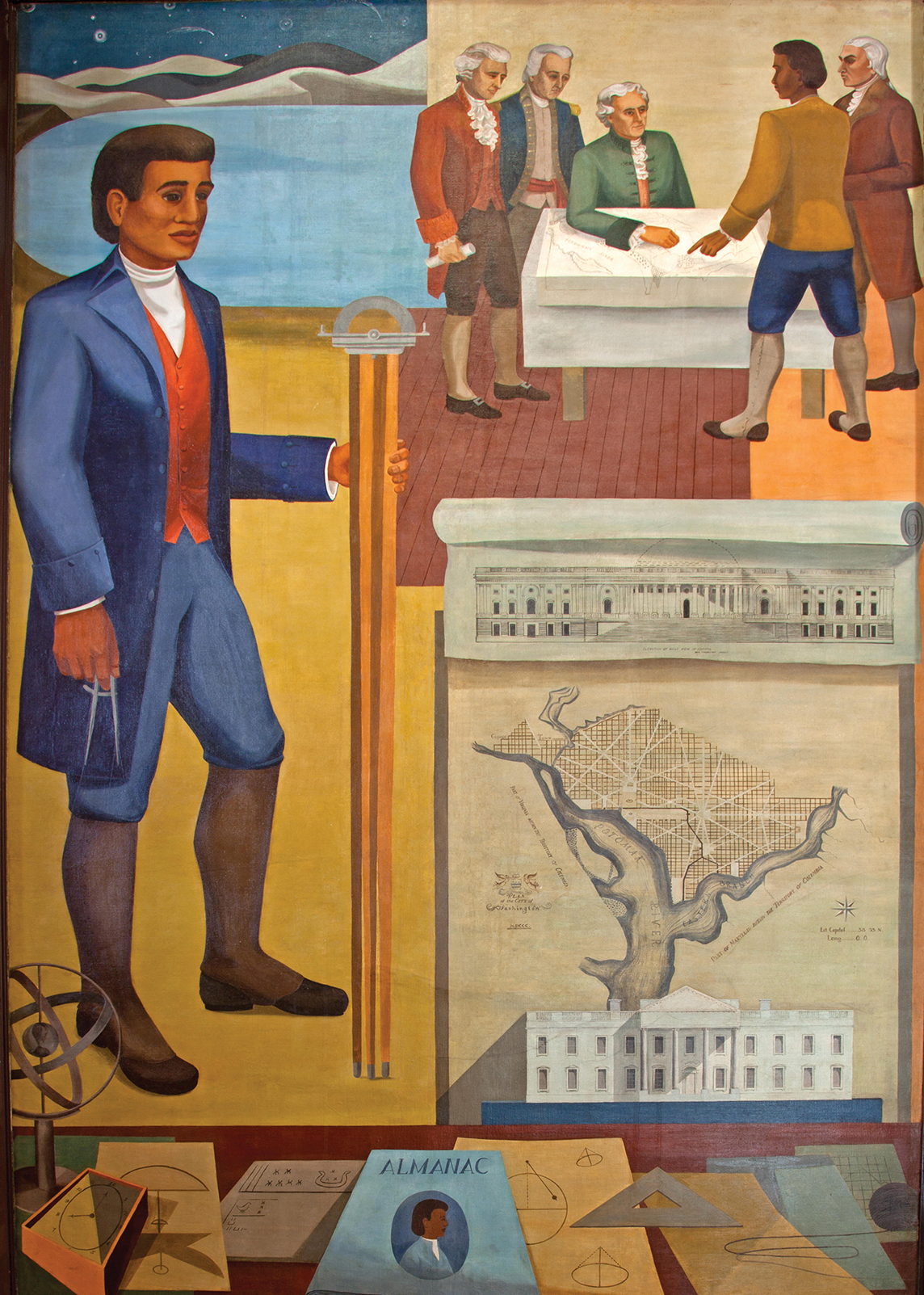
As students move through the mixer, they encounter voices that expose the contradictions of the founding in immediate and undeniable ways. One document is a 1791 letter where Benjamin Banneker challenges Thomas Jefferson, reminding him that the same man who declared that “all men are created equal” in the Declaration of Independence was also “detaining by fraud and violence so numerous a part of my brethren under groaning captivity and cruel oppression.” He forces Jefferson to confront the hypocrisy of condemning British tyranny while trafficking and enslaving human beings.
These Black and Indigenous people did not celebrate the founders — they confronted them.
In another document, Nancy Ward, a Cherokee leader, addresses U.S. officials in 1781, insisting on peace and respect for her people. She declared, “We are your mothers; you are our sons. . . . Our cry is all for peace; let it continue.” Speaking as a political leader, she calls for an end to settler violence and broken treaties while challenging U.S. assumptions about power and governance. Taken together, these sources make clear that debates over freedom were never settled — and that the Revolution meant very different things depending on who you were.
Another document asks students to consider the 1784 petition of Ned Griffin, a Black man who fought in the Revolutionary War in place of his enslaver in exchange for a promise of freedom. After risking his life in service, Griffin was instead seized and sold back into bondage. In his petition to the North Carolina legislature, he argues that by “contract and merit” he is entitled to his freedom, forcing the new nation to confront whether its promises of liberty applied to those whose labor and sacrifice helped secure its independence.
These Black and Indigenous people did not celebrate the founders — they confronted them. They exposed the distance between what the nation claimed to be and what it delivered. While today’s elites would prefer young people not learn these Black and Indigenous ancestors of the Revolutionary War era, the magic of critical thinking is unlocked when young people are allowed to consider their perspective.
For generations, curriculum writers have told students that the same men who held people in bondage were architects of freedom. They explain away this glaring contradiction by insisting that the founders were imperfect geniuses who behaved as “men of their time” would. This lesson speaks back to that claim by introducing students to white men who spoke out against slavery in the founding era. For example, in a 1787 newspaper column, theologian Samuel Hopkins observed that in the Revolutionary War, “we declared, in words and actions, that we chose rather to die than to be slaves,” and yet many patriots, “after obtaining liberty and independence for themselves . . . continue to hold hundreds of thousands of their fellow men in abject slavery.”
Students also encounter Samuel Thompson, a delegate in debate at Massachusetts’ 1788 convention to ratify the Constitution. He skewers George Washington, declaring, “Shall it be said that, after we have established our own independence and freedom, we make slaves of others? O! Washington, what a name he has had! How he has immortalized himself! But he holds those in slavery who have as good a right to be free as he has. He is still for self; and, in my opinion, his character has sunk fifty percent.”
The point is, critiques of slavery and the hypocrisy of the founding are not modern inventions. They were forcefully articulated at the very moment the nation was being imagined. They were voiced not only by morally astute individuals, but by a growing current of resistance — enslaved people who fled bondage, free Black communities who organized petitions and mutual aid, and early multiracial abolitionist networks that condemned slavery as a moral and political crime. In fact, the Pennsylvania Abolition Society was founded in Philadelphia in 1775 — before the Declaration of Independence — demonstrating that organized opposition to slavery existed even as the nation was being formed. The problem was never a lack of awareness. It was a lack of will.
To call the founders “men of their time” is not to explain their choices — it is to excuse them, and to ignore the many people of their time who demanded a more just vision of freedom and were deliberately overruled.
The Right to Imagine Freedom
At a moment when some political leaders insist that students must be made to love the nation, classrooms across the country are demonstrating a different possibility: that students should have the right to question it.
Students deserve a history that does not hide contradictions, but demands that they reckon with them. They deserve to confront a history of the nation’s founding in which the experiences of Indigenous people and Africans are not erased, but centered. They deserve to wrestle with competing visions of freedom — those advanced by wealthy white elites who built power through the theft of land and labor, and those articulated by the very people whose land and labor were taken. Our students need to decide for themselves what freedom should truly mean.
This is what it looks like when we trust students with history.
They do not turn away from it. They engage more deeply. They ask harder questions. They begin to imagine more just possibilities.
At the semiquincentennial, the question is this: Will students be forced to love the founders and their vision for the nation, or will they be allowed to consider the evidence and decide for themselves what kind of society they want to build?