Connecting Students to Indigenous History and Colonization Through Story
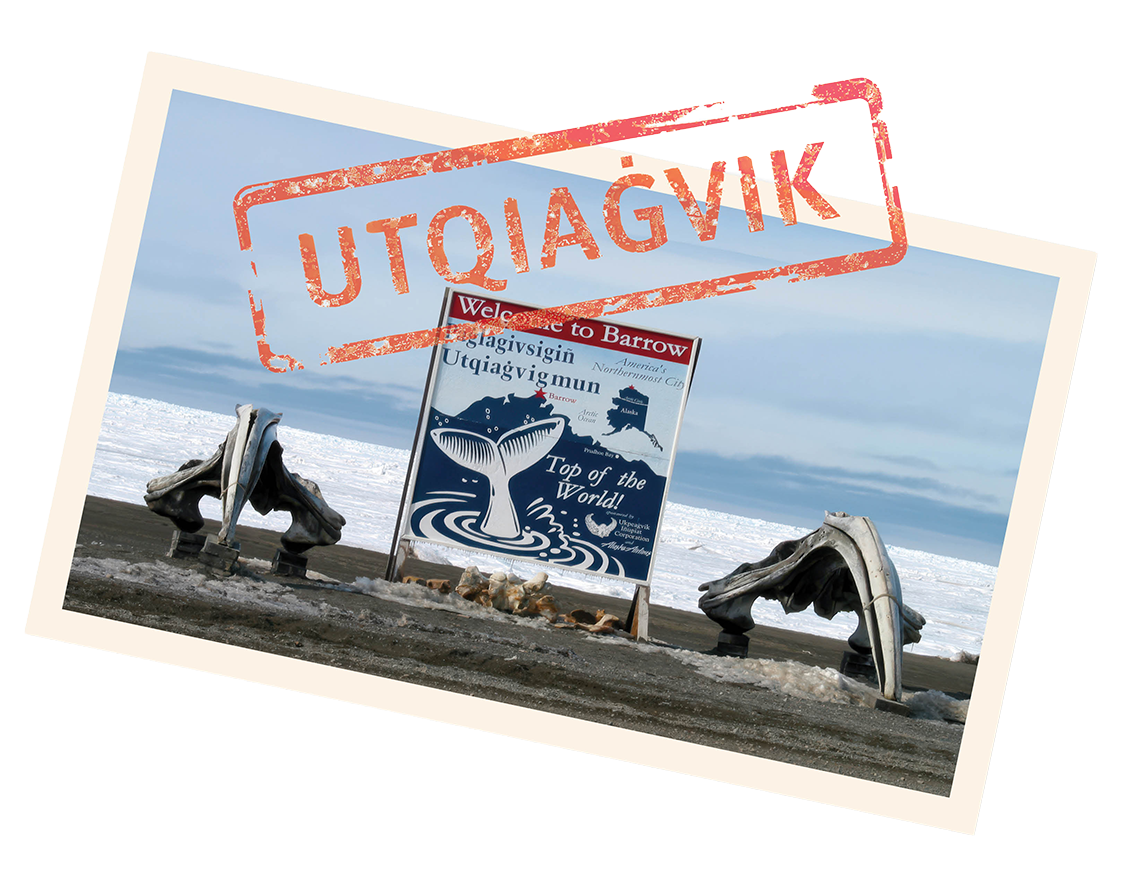
The bell rang and my 9th graders rushed off to lunch, everyone except Martha. “My auntie lives in Barrow,” she said to me when we were the only ones left in the room. Martha was generally reserved in class and hadn’t opened up to me before about her family, but that day she stayed for half of the lunch period telling me about the Alaska Native village where she grew up, how uncomfortable life in Anchorage had been for her, and what she missed most about home. Our high school of 2,000 students was bigger than her entire hometown, and it was a big culture shock. “I liked talking about Iñupiaq issues in class today,” she said. “None of my other teachers do that.” In that conversation with Martha, I knew my recent lessons on Indigenous history and colonization were important.
In my first year teaching, my lessons on Indigenous culture and history had not gone well. My class was racially and culturally diverse: about 15 percent white, 10 percent Alaska Native, and the rest were a mix of Polynesian, Korean, Hmong, Filipino, Latino, African, and African American. Like most of the teachers in my school, I am white; unlike most of them, I worked with Indigenous youth for a decade before becoming a teacher. Though I wasn’t so naive as to think we were beyond racism, I did think their diverse backgrounds would prepare us for talking honestly about Indigenous cultures and history. But even though my students were kind, thoughtful, and generally inclusive, I hadn’t set them up for success. The systemic racism toward Indigenous people in our society and our education system left my students with unconscious biases that I couldn’t ignore.
We were in the middle of a lesson exploring place names when I realized I needed to change my approach. In 2016, the town of Utqiaġvik voted narrowly and along generational lines to reclaim its Iñupiaq name, replacing the colonized name of Barrow. This was a year after Mount McKinley officially became Denali, honoring the Koyukon Athabascan name for North America’s tallest mountain. (In 2025, the Trump administration reinstated Mount McKinley, at the same time it dubbed the Gulf of Mexico the Gulf of America.) I was excited about Utqiaġvik and eager to share this news with my students. We read a news article and listened to a pronunciation guide, and several students had big reactions.
Joe loudly refused to try the pronunciation. “That’s so dumb that they changed it. I am not saying that.” Others, like Alyssa chimed in: “It’s too hard to pronounce. I just want to call it Barrow.” Stefano focused on the practical: “Are they really going to change all the maps? But everyone knows it’s Barrow.” Joe, Alyssa, and Stefano are all non-Native. My Native students stayed quiet.
Like Indigenous peoples worldwide, Alaska Native tribes faced invasion, violence, and erasure.
Everything felt like it was falling apart. My worst fear was that my classroom would be a place where students would be exposed to racist comments. I thought my students would be excited that a local town was reclaiming its linguistic heritage, but it was clear I needed a different entry point to talk about the politics of naming places. How could I help my non-Native students shift their perspective from focusing on the name they identified with being taken away, to a sense of solidarity or at least respect for the Indigenous name being reclaimed?
Like Indigenous peoples worldwide, Alaska Native tribes faced invasion, violence, and erasure. In the mid-1700s, the Russian Fur Company invaded southwestern Alaska, enslaving the Unangax̂ and Sugpiaq/Alutiiq people, decimating their populations and the fur seal. In 1867, Russia sold the few trading posts they controlled to the United States, which then claimed the entirety of Alaska as its territory.
Christian missionaries divvied up Alaskan communities to avoid competing with each other, at the same time European empires were carving up Africa. Then came the gold rush, fish canneries, and later the oil boom. The story of colonization continued: forced assimilation through religion and boarding schools, laws against Native landownership, forced relocation during WWII, parallel to the Japanese Incarceration story. Through it all, Indigenous Alaskans resisted and survived.
I knew enough history to include Indigenous perspectives in teaching about the place we live, but if I were to dive into those topics straightaway, I risked putting my non-Indigenous students on the defensive and exposing my Indigenous students to racist and insensitive comments from their classmates.
In designing this unit, my focus was on reaching my non-Native students — to challenge their biases about Indigenous people and spark curiosity about the Indigenous history of the place we live. All of my students deserve a history education that includes Indigenous perspectives, and before I could confront the erasure in the curriculum, I needed to confront the biases and prejudices within my class. My goal was for all students to be able to take pride in being Alaskans — not pride in the sense of ego or arrogance, but of recognition that there is a deep history and place-based culture that is innately valuable. I wanted students to reflect on what it means to live here — on this stolen land.
Before we jumped into the politics of naming places, I asked students to reflect on their own names and how they shaped their identities. “Would you ever change your name?” I asked. Many students brought up people changing their names when they get married. One year, Kai, a transgender student, talked about the significance of changing their name when they transitioned and how important their name change was to embodying their identity. This took the steam out of any argument that a name should never be changed.
Then I asked “How would it feel if someone changed your name without your permission?” This sparked outrage. A lot of “No way!” “I wouldn’t let them!” “They couldn’t do that!” Rahul explained, “I would feel like they took my identity and my power if someone did that to me.” Taylor summed up: “My name is who I am; no one else has the right to change it.”
Once students have identified with the significance of names, I want them to connect with the Indigenous perspective on colonized place names. I turn to a story to introduce the context for reclaiming Indigenous place names. Özlem Sensoy and Robin DiAngelo’s book Is Everyone Really Equal? retells the classic tale of Hodja and the Foreigner, where two groups meet and believe they understand each other, but their misinterpretations of each other’s gestures reveal fundamentally different worldviews. I play a two-minute video of Hodja and the Foreigner from Vimeo. Then in small groups students read aloud the two-page epilogue written by Sensoy and DiAngelo that adds a layer of the power dynamics of colonization to show that “cultural exchange” isn’t always equal or harmless:
Imagine the foreigner and his entourage are not just passing through, they are in town because their nation has just invaded Hodja’s. The foreigner has been installed to govern Hodja’s town and he now controls all of the land — land that Hodja and his family have lived on and raised their food on all of their lives, as did their ancestors before them.
Now Hodja and the townspeople must pay the foreigner large fees to use this land. The foreigner moves in and appoints his own people to key positions of government and sets up his culture’s rules and social norms. The foreigner imposes these new rules and norms upon Hodja and the townspeople.
As we read, students — both Native and non-Native — react to the injustice of colonization: “That’s not fair!” Jose exclaims. Andrea adds, “Wait, why does the foreigner get to take over the government?” “Yeah,” says Abhinav, “Nobody voted for them; what gives them the right to just take over?”
What I love about Sensoy and DiAngelo’s epilogue is that we read about the impacts of colonization across generations through a narrative that illuminates injustice, without using terms that might make students react defensively. The story avoids terms like “colonization” or “Indigenous.” Students don’t jump in to defend the colonizers or the inevitability of colonization; they connect with the human experience first.
I further adapted Sensoy and DiAngelo’s epilogue (with the authors’ generous permission). In my version, a town renamed during colonization faces a decision on whether or not to restore its original Indigenous name. I use local place names, but spell them backwards, setting us up for a reveal at the end: This isn’t just a distant parable. It’s our story, here and now: Hodja’s people are the Taipuni (Iñupiaq) and their town is Kiva’iktu (Utqiaġvik). The foreigner changes the town name to Worrab (Barrow), named after a rich lord from the foreigner’s homeland. We keep reading:
Fast forward 200 years later to today. The descendants of the Taipuni changed their entire way of life, customs, and even language to survive. Many of them have become educated in the ways of the foreigners and have been successful in this new society. Others have struggled to be successful in a new world that is so different than their ancestors’. Now, descendants of the foreigner and descendants of the Taipuni both have positions of leadership and power, but the language, customs, and laws are based on the foreigner’s culture. Some Taipuni have passed on their traditions to their young children, but others see little value in cultural traditions that don’t seem to get them anywhere in society.
However, there are some Taipuni who want to bring back more elements of their traditional culture to connect with their heritage. A group of them comes up with the idea of changing the name of the town from Worrab back to Kivga’iktu.
Many people are excited about this idea because it is an opportunity for the society to incorporate a small piece of Taipuni history into a town that is still ruled by the foreigners’ language and culture. Many other people are frustrated. They can’t understand why anyone would want to change the name — it’s been Worrab their whole lives. Why can’t these troublemaker Taipuni just get over their history and accept the way things are today so everyone can live in peace?
When looking at real-life present-day debates, I have found that students often struggle to articulate the reasoning for conflicting viewpoints; they worry about being judged by classmates, and if they do feel strong conviction, it’s difficult to see legitimacy in other viewpoints. Storytelling provides a pathway for students to identify with new perspectives.

After the story, the students discuss: Who should get to decide the town name?
“If someone forced my family to change our name and later we wanted to change it back then we should be able to,” Kayla stated. “That actually happened to my family!” shares Orion. “I think if they want to change it back they should be able to. It was their town to start with and they never even said those other people could come take it over,” reasons Alberta. The class murmurs in agreement. They seem clear that the people who want to change the name back to the Indigenous name have the right to do so.
I remind them not everyone in the town agrees, and I ask how they think the town should decide. “They should just have a town vote,” several students suggest at once. “But wait, why does everybody get to vote? It’s not even the foreigners’ town,” Paul cautions. “Yeah, it shouldn’t just be up to a vote for everyone,” suggests Edgar. “The Taipuni people should be the ones to decide.” Students seem dissatisfied with the idea of a majority vote, concerned that the majority might not always do what’s just. I push them to explore these ideas, but don’t force a class consensus.
After our discussion, I reveal my secret: The names in the story of the town and the Indigenous people are actually Alaskan names spelled backwards. I ask students if they feel differently about the story and the town renaming now that they know it really happened in Alaska. Both Native and non-Native students are eager to share nuances they know about the Iñupiat town, “We played them at state last year, and some of them still call it Barrow,” says Albert. “My auntie lives there,” Martha shares. “You said it wrong, Ms. McBride — it’s /ʊtkiˈɑːvɪk/!” Daniel corrects me. No one refuses to try pronouncing Utqiaġvik.
“But wait, how did they decide to change the name?” Stuart asks. I explain that it was a simple majority vote, open to all the registered voters in the town. Many students are surprised. “Dang, it’s just like that in real life?” questioned Andrea. “I [would have] thought they could come up with something better than that.” “Yeah, for real,” chimes Stephanie. I share that the vote was split, and the town was divided more by generation than by race. Young adults tended to vote for Utqiaġvik and older voters tended toward Barrow.
In this discussion several non-Native students showed that they had expanded their circles of concern: “I never really knew that it happened like that for Native people,” shared Abhinav. “I’m glad they got to change the name back because it wasn’t fair what happened to them,” Andrea concluded. And others, like Jose and Taylor, got quiet, like they were processing what it means to have sided with Alaska Native people so strongly in a story of colonization, now that they knew that’s what it was.
Unlike my first year teaching, Native students joined the discussion. I checked in with a couple of them at the end of class to ask about their experience. “Did you feel like your classmates were being respectful of Native people?” I asked. “Yeah,” said Alberta, “not everyone agreed, but everyone was respectful.”
My hope is that all my students are able to connect with these questions of naming, power, and justice. These debates, these histories, and these decisions are part of our state and country’s story. The names we give to places tell us whose stories we honor and whose we erase.
Now that students have had a chance to identify with the experience of colonized Indigenous people, we explore the history of colonization in our region and the impacts on the local Dena’ina people. I’m not an expert on this topic, but I’m able to draw out themes of colonization and share some relevant local information. Everyone is respectful. I don’t get any pushback, and my Native students seem comfortable exploring this topic with their peers.
Name changes are not the answer to reparations owed, but they open the door to thinking about those bigger questions.
Ultimately, my goal is not just to build empathy, but to channel empathy into action for justice. I know it’s easier to make moral judgments about history than it is to take a stand on current controversial issues, so I introduce concrete examples of people fighting for justice. I share about students in another Alaskan town who lobbied the Department of the Interior a few years ago to change the name of a local creek from Sq– Creek (the racist and sexist slur for Indigenous women) to the traditional Indigenous name for the creek. In 2022, after many people pushed for name changes throughout the United States, the Department of the Interior renamed 650 geographic features throughout the country that had sq– in their name. The same process happened for the N-word in the 1960s and for J-p, a slur for Japanese, in the 1970s. Illuminating this process helps students imagine how social change happens: people with the moral conviction and courage to speak out against injustice in the status quo.
In the Hodja and the Foreigner story we explored the history of an Iñupiat town in another region of the state. Now I invite them to reflect on the land we live on in Anchorage: Whose land is it? Who named these creeks, trails, and neighborhoods? We look up Indigenous place names for a few local landmarks: Cook Inlet, named after Captain Cook, was first Tikahtnu (“Big water”); Chester Creek is a codified mispronunciation of the Dena’ina name Chanshtnu (“Grass”) Creek. For many students, these Dena’ina names are unfamiliar, and when I suggest that place names like these could be officially changed back to their Indigenous names, there is less enthusiasm, “But it’s Chester Creek; everyone knows that. I can’t even pronounce [Chanshtnu],” Sam says. “Wouldn’t that be confusing to have new names for everything?” Kristian adds. Several students share hesitation about the idea of changing the names they know for new (or rather new-to-them) names.
I empathize with my students who aren’t Dena’ina and say that it might feel uncomfortable to think about giving someone else’s name to a place that feels like your own. And I remind them that the names we know are the foreign ones. I invite students to sit with that discomfort and write about it.
- Imagine the names of local creeks, rivers, mountains, and some neighborhoods were changed back to the original Dena’ina names for those places. What would that feel like? Reflect on why you think it might feel like that.
- Does this feel similar or different from Utqiaġvik/Barrow? Why?
- Now put yourself in a time machine and imagine what it felt like a few generations back when Europeans and Americans were colonizing this area and came up with new names? What might that have felt like?
The goal isn’t for everyone to agree about what the name should be for our local places, but to provide a space to ask the questions and reflect, honestly. Sometimes to build empathy and shift perspective, we need to let ourselves feel uneasy and reflect on those feelings. Skipping this step and not building the scaffolding to support this vulnerable introspection can lead to defensiveness, as I found my first year.
When students are interested in pushing for local change, I walk them through the USGS name proposal site as a simple first step to advocate for Indigenous place name changes. This is a concrete action that reinforces for students their role as political actors. School isn’t just practice for being an adult — or it shouldn’t be: Right now as young people there is a lot they can do. Name changes don’t shift power or resources back to Indigenous people. They are not the answer to reparations owed, but they open the door to thinking about those bigger questions.
My hope is this is just the beginning: A step toward healing, a way to ask What is the name of this place? What is its story? What is my role in that story? These answers are still being written. I want my students — Indigenous and not — to know they all have a role to play in writing the next chapter. And it’s my job to equip them to write that chapter well, grounded in empathy with a full understanding of the true histories of our home.