“Don’t Let This Intimidate You”: An Interview with Treasure Thoreson of the Minnesota 15
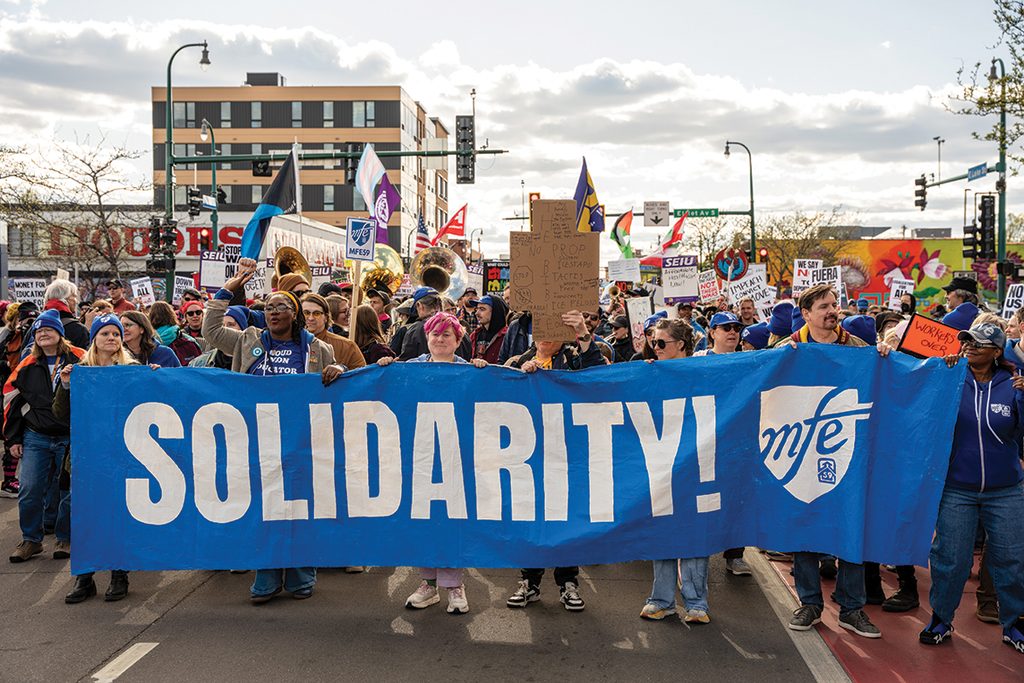
On June 16, the federal government charged 15 Minnesotans who had joined tens of thousands in the Twin Cities to resist ICE during Trump’s Operation Metro Surge with “conspiracy to impede or injure a federal officer.” The Minnesota 15 includes union carpenters, electricians, teachers, university staff, and nursing home workers. At the end of July, Rethinking Schools managing editor Adam Sanchez interviewed Treasure Thoreson, one of the Minnesota 15 who is on the executive board of the Minneapolis Federation of Educators (MFE).
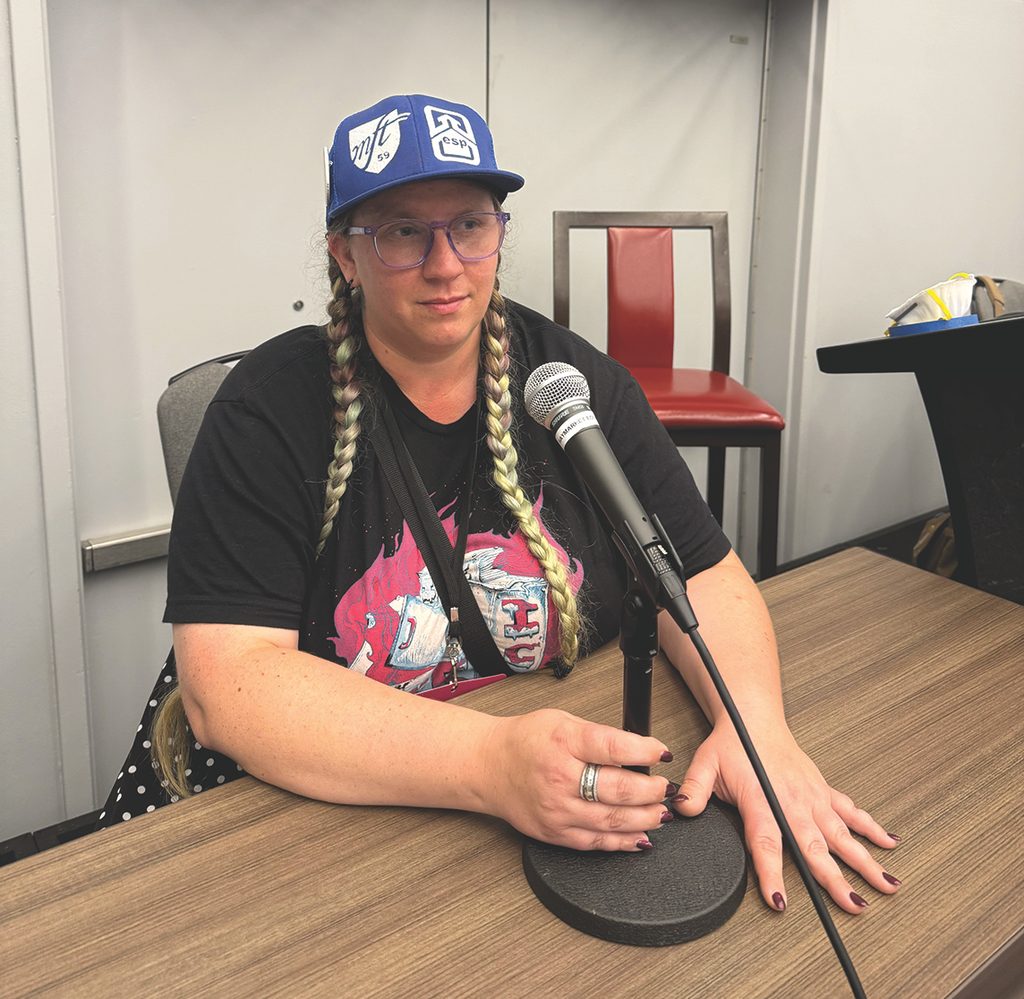
Adam Sanchez: Could you talk about your role in the classroom and in the Minneapolis Federation of Educators?
Treasure Thoreson: I’ve been working for Minneapolis Public Schools for 13 years. The first three years I was a special education assistant in an autism classroom in a south Minneapolis elementary school. I just finished my ninth year as a special education teacher at a dual language school in north Minneapolis. This fall, I’ll be starting at a new school as an autism teacher.
I’ve always been a member of my union, but I wasn’t active at first. When our union went on strike in 2022, it was the first time in the last 50 years we had gone on strike. I was a strike captain for my school, and it changed my life. It gave me confidence in myself and helped me see the power of our union. So after that, I got even more deeply involved. This year I was elected to the executive board of our teacher chapter. Building a strong union is one thing I’ve put a lot of energy into. I find it to be incredibly fulfilling and rewarding work. I’ve seen it make our working conditions better and be a mechanism for major change within our community. I feel fortunate to be living and working in Minneapolis where I can be a part of such a powerful union.
AS: Can you explain the transformation of your union local in the years leading up to the uprising we saw in Minneapolis last January?
TT: When I started in 2013, our union was very top-down. You pay them dues and get a service back is how most people viewed it. We went many years with a zero percent raise or a half percent raise — just not making many gains. A caucus of educators formed to move the union toward an organizing model, focusing not just on bread-and-butter contract issues, but also social justice and common good demands. Fast forward to now and we’ve made such a transformation. Our union is a space where we engage as rank-and-file members in our day-to-day, where we have power over how our union works, what we want our contracts to look like, and what we want our school sites to look like. And we’ve had experience in working together in solidarity to elevate one another.
We’ve had some major wins in these last few contract cycles since our 2022 strike. In Minneapolis, education support professionals (ESPs) or educational assistants and adult educators have been a part of our local for decades. Our ESP chapter — I remember when I started, I was making $15 an hour, but now starting wages are closer to $25 an hour. There’s still a ways to go of course, but we’ve made progress. Our adult educators just got moved onto the K–12 salary schedule. Before, these educators, who had master’s degrees or doctorates, had topped out in their pay scale that was way less than their counterparts in K–12 with the same education. And beyond that, there was incredible work done around the pandemic making sure students had what they needed and through the George Floyd uprising. There were several schools directly affected — families who lived close to where George Floyd was murdered and lived through the uprising.
In 2024, when Trump got reelected, I and other educators saw the writing on the wall and created a deportation defense committee. Over that school year, we started to build a network of educators across the district. We urged our school district to come up with a policy about protecting our students, staff, and families from ICE if they came on school property. We held know-your-rights trainings for staff and families. We held clinics on the delegation of parental authority. If a parent was abducted by ICE they could designate somebody as a temporary caregiver for their children. And for some families, the person who they knew and trusted best was an educator. The practices we had developed helped prepare us for this winter.
During Operation Metro Surge we were doing patrols around our schools. We raised money so that families could pay rent. We held food distributions. Some schools delivered hundreds of boxes of food a week. We watched kids go to and from school. We got them rides when parents stopped feeling like they could put their kids on the bus safely because ICE would follow school buses to grab parents waiting for their kids. There were so many ways that educators showed up. We had to make sure that kids were safe, that families were safe, that our colleagues were safe. Everybody I knew was doing something to support our community.
AS: Could you say more about what it was like to live through Operation Metro Surge? I’ve talked to teachers in Los Angeles and Minneapolis who have organized the kind of patrols you talk about, but I think for teachers outside some of these flashpoints of resistance, it’s hard to imagine patrolling ICE on top of being a teacher, which is already way more than a 40-hour-a-week job.
TT: I think if you look back to when we started our deportation defense committee, a lot of people weren’t ready for the conversation yet. People felt strongly that there was no way that ICE would ever approach a school. Because why would the government approach children like that?
But the day that Renee Good was murdered, ICE rolled up to Roosevelt High School in the middle of their dismissal. They deployed tear gas, tackled people, and detained an educator who was protecting their students. The next two days, the district called off school for kids. Staff went back that Friday and had a big meeting. As the building steward at my school, I said: “Look, ICE is clearly unafraid. They’re willing to cross that line and go on school property. And we need to have a real conversation about how we’re going to keep our school safe, how we’re going to keep each other safe, how we’re going to keep our students and families safe.” Every staff member in our building did something. Big or small, it was all important. We just dug deep and did what needed to be done in that moment.
The community around the school also stepped up to make sure that we were OK. Community members would reach out to us and ask how they could support patrols or who to reach out to if they saw ICE in the neighborhood. And so it wasn’t just the school. A lot of people during this time stepped up. Everybody did something to help support each other. It was exhausting and hard and depleting when things were already so hard. The levels at which we were engaged in this work weren’t sustainable forever and things have slowed down a bit.
AS: What was the impact of all this on students?
TT: I work with elementary school students, K–5th grade. Every student noticed that suddenly, half the kids were gone. The district offered some resources, but it came down to having some tough conversations about how people in our community don’t feel safe right now, so they’re staying at home. And that’s a hard conversation to have with a 5- or 6-year-old. But they also hear their parents talking about this stuff and they talk about it at school with their friends. Their mom and dad are staying home right now and they’re coming to school because school is seen as the safest place. Or their cousins are staying with them right now to feel safer. Maybe their family member got abducted and they don’t know where they are. Not knowing if they’ll see them again. It’s a devastating conversation to have or overhear.
AS: That is heartbreaking and must have felt really tough, but the flip side to the cruelty of these raids in that moment was the resistance. A kind of resistance we haven’t seen in a long time in this country. The mass action on Jan. 23 was the closest thing we’ve seen to a general strike in this country in decades. What are your key takeaways from that period of resistance in Minneapolis? And what role did educators and educator unions play?
TT: If you lived in Minneapolis, it was apparent everywhere you went. It was inescapable. There was no way to not see it. You saw ICE everywhere. You would drive past the gas station and see an empty car and no one nearby because ICE had just taken somebody from the pump. You’d see community patrolling ICE everywhere. Plus, Minneapolis has a very deep labor history.
The action on the 23rd was a mass labor effort. There were a lot of unions involved in making that happen. As educators, we just happened to have that day as a professional development day. And we flexed our power and we showed up in the streets. Everywhere you looked downtown that day, you saw MFE Blue or SPFE (Saint Paul Federation of Educators) Red. The educator presence was enormous. Last figure I heard was that 300,000 people participated in some way that day, whether that was no work, no school, or no shopping. There were a lot of businesses where so many people called out that they just shut down for the day. Other businesses were pressured by employees and patrons to close. We were coming right off Renee Good having been murdered a week or so previous, so people were really hyperactivated.
AS: At the beginning of February, Trump announced a withdrawal of 700 ICE and Border Patrol agents, and the national media pretty much stopped focusing on the Twin Cities. What did things look like once the media left, after the drawdown of the surge, up until your arrest in June?
TT: I would say things didn’t feel like they were starting to slow down until the beginning of March here. Eventually, it did seem like fewer agents were coming and when they were coming, they weren’t as aggressive. But ICE is still here. I was reading about sightings in my neighborhood just yesterday. They’ve just gotten sneakier and more unpredictable. They are in and out very quickly. Or they drive through Minneapolis to get to somewhere else. But lately there have been more arrests. There haven’t been this number of arrests since February.
AS: And on June 16 you were arrested by the Trump administration along with 14 other Minneapolis organizers. What was that like? And why did they target you?
TT: I had no idea that it was coming. It was early in the morning. I had just woken up. I was sipping some coffee, watching the news, when I heard a knock on the door. I saw this woman standing there in business clothing with a homeland security vest on top. She knew who I was and she said, “We have a warrant for your arrest, due to conspiracy to impede or harm a federal officer.” I asked if I could put on different clothes, because I was still in my pajamas. She told me that was fine, but she had to watch me. I hugged my partner goodbye. I walked outside and this guy walked up and said, “I have to handcuff you now.” I said, “Well, I’ve been very compliant so far. Do you need to put handcuffs on me?” He replied, “Yes, but I’ll put them on in front.” Then he put me in the car. They brought me to downtown St. Paul, where the marshal’s office is. I was so confused at that point. I wasn’t sure what they were referring to because I have never harmed or intended to harm a federal officer.
When we got to the marshal’s office, I saw the person ahead of me was one of my friends, another union activist. They pulled him out of the car and had him in manacles around his ankles and his hands. They had him walk out into a cell ahead of me. Then they let me out and put me in a cell by myself. It was scary and confusing. I could hear people talking down the hall and figured out at least a couple voices that I knew through labor organizing. So it was pretty apparent to me early on that this was not just random. Most of the people who were arrested that day were labor activists — all people who are very active in their unions.
This labor connection is important. Look at schools, for example. Through our union and through our network, we were able to support families throughout Minneapolis. We were able to come together through our union and work in solidarity and talk about the problems we were seeing and work to solve those problems together. And that scared this administration. They don’t want us to have solidarity. They don’t want us to talk about our living conditions and our working conditions. They want us to accept whatever they hand us.
It just became clear that this was about scaring people out of doing the right thing. Scaring people out of protecting their neighbors and their communities. Scaring people away from standing up and saying no to fascism. And we can’t let them get away with that. We sent the message that it’s not OK to come in and kidnap our neighbors, to disappear people, to bring violence to our schools and to our communities. And we need to continue to stand strong despite these efforts to scare us.
AS: What has been the response to your arrests from the Minneapolis community?
TT: I’ve been feeling nothing but love and solidarity from Minneapolis. It feels like all of Minneapolis is behind us in this moment. People have shown up in so many ways, whether it’s contributing to a fundraiser or dropping off a card and some flowers. Someone did the most Minnesotan thing and brought me a tater tot hot dish one day. It’s been incredible.
AS: What about your union and the larger labor movement? How have they responded?
TT: Again, I’ve felt nothing but love and support from MFE and our statewide union. The day I got out of jail, they made sure I had a cell phone. They’ve made it clear from the start that they’re behind me and that they’re not going to forget about me.
At the beginning of July, we had a big rally before our first hearing after being arrested. And we had a bunch of speakers from all sorts of different unions across the Twin Cities asking for these charges to be dropped. So yeah, it’s felt like we’re going to fight through this together.
AS: What can those of us around the country do to support the Minnesota 15?
TT: We have our fundraiser that people can contribute to. There’s a website, minnesota15.org, that has a draft statement that you can bring as a proposal to your union to pass in solidarity. But I think the most important thing is to just not back down in this moment. Don’t let this intimidate you. I’m going to continue to support my community and do whatever it takes to make sure my community has what it needs to be safe. I hope everybody else feels empowered to do the same.